
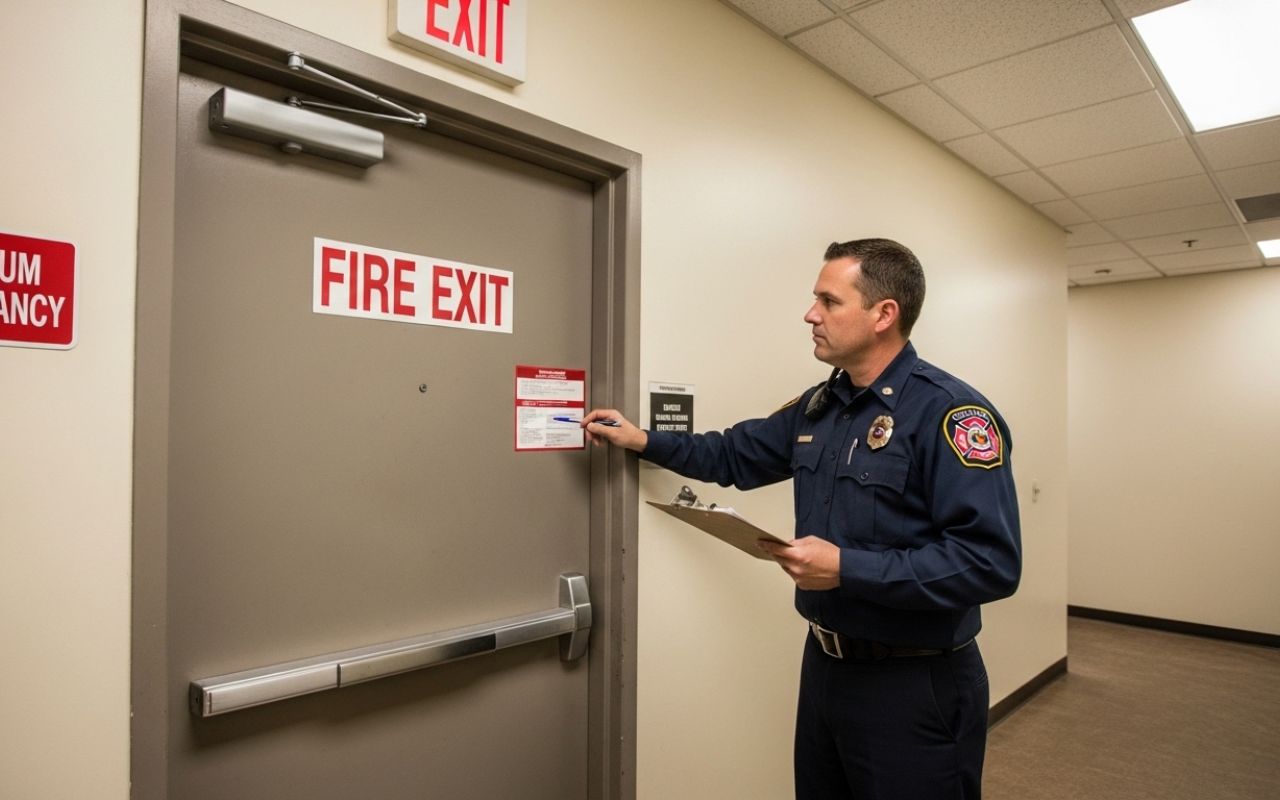
Fire safety rules can feel complex. However, strong doors save lives when seconds matter. At Chicago Door People, we help building owners understand fire door compliance in Chicago with clear steps, safer habits, and practical support that protects people, property, and daily operations.
What keeps fire door compliance in Chicago fully ready?
Fire door compliance in Chicago stays ready when rated doors, frames, hardware, labels, and closing devices work together as tested. Moreover, regular checks, fast repairs, and clear records help every opening perform during an emergency. At Chicago Door People, we treat fire door compliance in Chicago as a daily safety duty, not a last-minute task.
Understand Chicago rules that strengthen daily fire door safety
Chicago Door People knows that local safety rules and national standards must work together. Therefore, fire door code compliance starts with the right assembly, proper installation, and ongoing care. We also help owners stay focused on doors that protect exits, corridors, and occupied spaces.
In practice, this means you should review:
- door ratings that fit the opening location
- frames and hardware that match the tested assembly
- closing and latching parts that work every time
- inspection records that show a clear maintenance history
Because codes can change, Chicago Door People recommends a routine review plan. As a result, you reduce risk, avoid surprises, and keep your building better prepared.
Recognize NFPA 80 details that reduce building risk
NFPA 80 in Chicago gives a trusted path for safer openings. Furthermore, it explains how fire doors should be installed, inspected, repaired, and maintained. When teams ignore those details, small issues can grow fast.
We look closely at each part of the opening. For example, hinges, seals, glazing, frames, and closers must support the tested door assembly. Likewise, pairs of doors must close in the right order. When these parts work together, fire door compliance in Chicago becomes much easier to maintain.
Chicago Door People uses this approach to keep safety practical. Instead of guessing, we focus on tested performance, clear records, and steady follow-through.
Check fire door labels before small problems grow
Labels matter because they prove the opening was tested for fire use. Therefore, fire door labels in Chicago should stay legible, attached, and matched to the opening location. Missing or damaged labels can slow inspections and raise concerns.
When we review labels, we check for these points:
- the label is permanent and readable
- the rating matches the opening use
- the frame information supports the full assembly
- field changes have not damaged the listing
Chicago Door People also reminds owners not to treat labels like simple stickers. Instead, they are part of the safety story that supports fire door code compliance and better inspection results.
Prevent common defects that weaken safe door performance
Even a good door can fail if parts wear out. For that reason, routine reviews should look for gaps, loose hinges, broken seals, damaged frames, and weak closers. Also, doors that do not latch fully can lose their protective value.
Unauthorized changes create major problems as well. Extra holes, new locks, or altered glazing may affect the tested assembly. Because of that, Chicago Door People encourages quick action when damage appears. Early repairs often protect both safety and compliance.
If you manage pairs of doors, double-door coordination matters too. You can learn more in Fire-rated Double Doors in Chicago: Code & Safety Guide.
Follow these steps to keep fire doors compliant
A simple process helps teams stay consistent. Therefore, we suggest a clear schedule that supports fire door compliance in Chicago across the whole property.
- Start with a visual walk-through of each opening.
- Confirm labels, hardware, seals, and latching action.
- Document defects right away with photos and notes.
- Repair or replace damaged parts without delay.
- Schedule a deeper inspection at regular intervals.
- Store reports where managers can find them quickly.
This method works well for busy sites. Moreover, it helps Chicago Door People and building teams solve problems before an official visit. For a deeper review path, read Fire Door Inspection in Chicago: NFPA 80 Compliance Guide.
Train your team to support safer daily operation
People affect door performance every day. So, staff should know why blocked doors, damaged hardware, and held-open leaves create risk. Short training sessions can make a big difference.
We recommend teaching teams to:
- close doors fully after use
- report damage as soon as they see it
- avoid unapproved field changes
- watch for worn seals and failed latching
Chicago Door People believes simple training builds safer habits. As a result, daily use supports fire door compliance in Chicago instead of working against it.
Use digital records to simplify every future inspection
Good records save time and reduce stress. Therefore, digital logs can track door locations, defects, repairs, dates, and follow-up actions. This creates a clear history for managers and inspection teams.
Digital reminders also help you schedule reviews on time. In the same way, photo records can show progress after repairs. When combined with regular site checks, that system supports stronger fire door code compliance and fewer missed steps.
If you want to prepare before an official visit, see State Fire Inspection in Chicago: Fire Door Readiness. If you need help now, connect with Chicago Door People for practical guidance and next steps.
Frequently Asked Questions
What is a fire door and why does it matter?
A fire door is a rated opening assembly that helps slow fire and smoke. Therefore, it protects escape paths and supports safer evacuation. For a simple overview, read What Is A Fire Door? Everything You Need to Know.
How often should fire doors be checked in a building?
Fire doors should be reviewed on a routine schedule and inspected more deeply at planned intervals. Moreover, frequent visual checks help catch problems early. You can explore the process in Fire Door Inspection in Chicago: NFPA 80 Compliance Guide.
What problems usually cause a failed fire door inspection?
Common issues include damaged labels, large gaps, broken seals, poor latching, and unapproved modifications. As a result, the door may not perform as tested. For related readiness tips, visit State Fire Inspection in Chicago: Fire Door Readiness.
Why are fire door labels in Chicago so important?
Fire door labels in Chicago help confirm the door rating and tested assembly details. Therefore, they support faster verification during reviews. You can also build context with What Is A Fire Door? Everything You Need to Know.
How can double doors stay code-ready in busy buildings?
Double doors need proper coordination, hardware, clearance control, and full closing action. Likewise, both leaves should support the tested assembly. Learn more in Fire-rated Double Doors in Chicago: Code & Safety Guide.
References: