
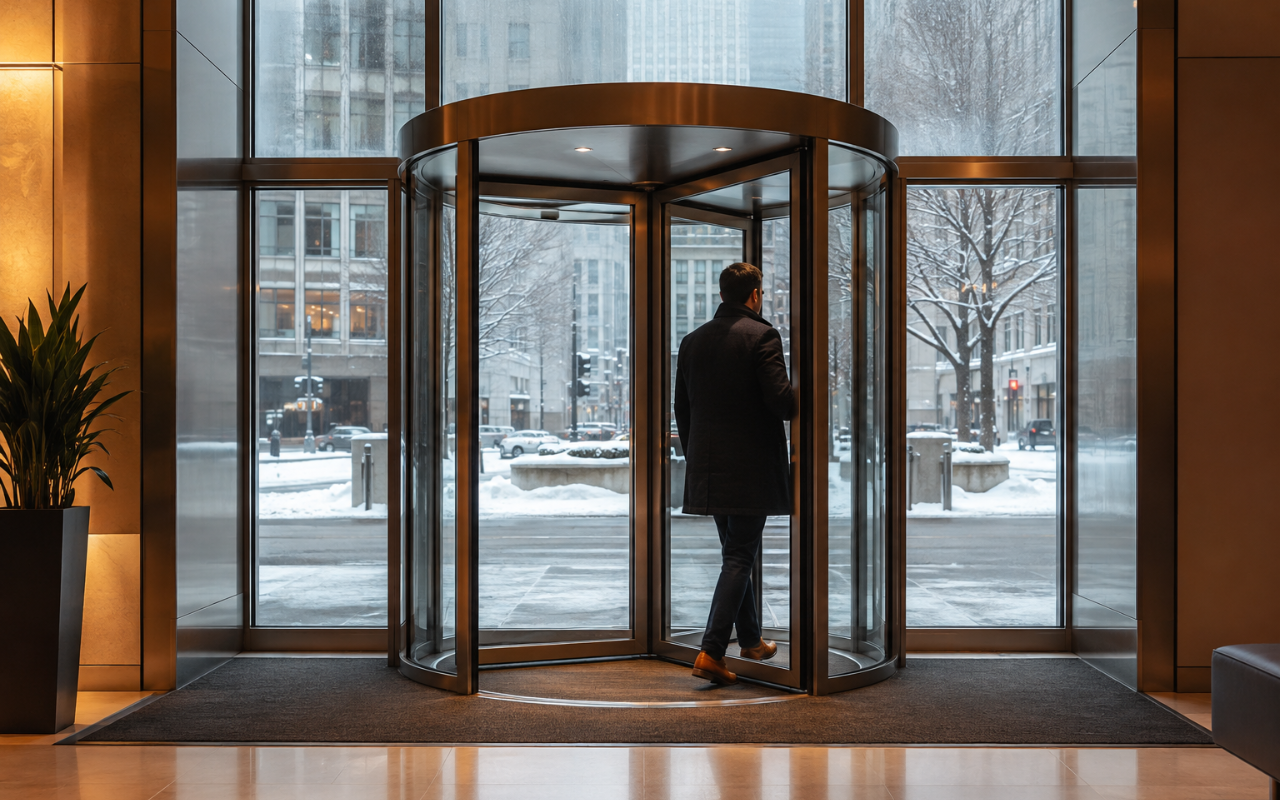
Revolving door energy savings matter because a revolving entrance limits air exchange during every entry. That helps Chicago buildings reduce drafts, lower HVAC strain, and keep lobbies more comfortable.
Chicago weather can make a building entrance feel like a weak spot. Cold wind, summer heat, and constant foot traffic all affect indoor comfort. When entry doors leak air all day, HVAC systems work harder.
At Chicago Door People, we review entrance conditions so building teams can reduce waste and improve comfort. For related service details, review Revolving Door Installation and Repair in Chicago, IL.
Reduce Lobby Drafts With Better Entrance Air Control
Revolving doors reduce lobby drafts by keeping the entrance mostly closed during use. Each compartment moves people through while limiting direct airflow.
As a result, conditioned air stays inside longer, and outdoor air enters in smaller amounts. This matters in Chicago because winter wind can push cold air through busy openings.
In summer, warm humid air can also raise cooling demand. According to MIT research, swing doors can allow far more air exchange than revolving doors in a busy building entrance.
Comfort Benefits for Busy Entrances
- Less cold air rushes into the lobby
- Indoor temperatures stay more stable
- HVAC systems face fewer sudden load changes
- Guests and tenants feel fewer drafts near the entry
With Chicago Door People, you can look at your entrance layout and decide whether a revolving door supports your energy goals.
Compare Revolving Doors Against Swing Door Heat Loss
The revolving door vs swing door energy efficiency difference comes from how each door moves air. A swing door creates a wide opening each time it opens.
A revolving door keeps moving sections between the lobby and the outside. Swing doors can work well for many entrances, yet they often allow larger air bursts.
Revolving doors create a more controlled path. That is why high-traffic buildings often see stronger savings when replacing or improving older entry systems.
Entrance Airflow Differences
- Swing doors open one large path to outdoor air
- Revolving doors divide entry traffic into smaller zones
- Swing doors may increase drafts near reception areas
- Revolving doors can support better entrance comfort
For more background on entrance benefits, visit Why Use Revolving Doors? 6 Benefits You Should Consider.
Key Takeaway
Revolving doors can reduce uncontrolled air exchange at busy entrances. This helps protect lobby comfort and lowers sudden heating or cooling demand.
Compare Entrance Problems and Energy-Saving Solutions
Different entrance issues can reduce comfort and increase HVAC strain. A clear comparison helps property managers decide whether repair, adjustment, maintenance, or installation should be reviewed first.
Revolving Door Energy Savings Guide
| Entrance Problem | Why It Affects Energy Use | Helpful Next Step |
|---|---|---|
| Cold drafts near the lobby | Outdoor air enters quickly and forces heating systems to respond. | Review door seals, alignment, and entrance design. |
| High foot traffic through swing doors | Frequent large openings increase air exchange. | Compare revolving door vs swing door energy efficiency. |
| Worn revolving door seals | Air can leak through gaps even when the door is closed. | Inspect seals, brush strips, panels, and alignment. |
| Uncomfortable vestibule temperature | Poor buffering can allow heat loss or heat gain near the entry. | Review vestibule heat loss reduction options. |
| Older entrance system | Outdated hardware may not control airflow well. | Ask whether repair, adjustment, or replacement makes sense. |
Limit Vestibule Heat Loss During Chicago Weather Shifts
Vestibule heat loss reduction starts with controlling air movement at the doorway. A vestibule helps create a buffer zone.
A revolving door can strengthen that buffer by reducing the chance of both indoor and outdoor air mixing at once. Pacific Northwest National Laboratory explains that vestibules support energy conservation by reducing infiltration at primary entrances.
This supports the same practical goal many Chicago buildings have: keeping conditioned air inside while people continue to move through the entrance.
For energy efficient building entrances in Chicago, we check the door wings, seals, surrounding glass, floor conditions, and traffic patterns. Small gaps can weaken performance.
Learn more about entryway heat movement at Revolving Door Vestibule Heat Loss in Chicago Guide.
Key Takeaway
A revolving entrance can strengthen vestibule performance by limiting direct air mixing. Seals, glass, alignment, and traffic patterns still need review.
Plan Installation Around Real Building Traffic
Revolving door installation Chicago energy savings depend on the building, traffic level, entrance size, and condition of nearby doors. The best result comes from matching the door system to real use, not guessing from appearance alone.
When customers contact Chicago Door People, we first ask about the entrance problem, building type, and current door condition. Then we review whether repair, adjustment, or installation makes the most sense.
Before work begins, we explain the practical next step clearly. This helps owners avoid rushed choices and protect energy performance, safety, and daily access.
Installation Planning Factors
- We ask about drafts, traffic, and door movement
- We review seals, glass, hardware, and alignment
- We explain repair or installation options
- We help plan the work around building needs
Maintain Door Seals for Year-Round Performance
Revolving door energy savings can weaken when seals, brush strips, bearings, or panels wear down. Regular maintenance helps the door rotate smoothly and keep air leakage under control.
A small gap can create comfort problems over time. Our team checks for worn seals, rough movement, damaged glass, poor alignment, and control issues during each inspection.
We also look for signs that nearby swing doors are adding drafts to the same entrance area. Routine attention keeps the entrance safer and easier to use.
Maintenance Checks for Revolving Doors
- Inspect seals before heavy winter use
- Clean tracks and remove debris
- Check rotation speed and smooth movement
- Repair gaps before they increase energy waste
Regular service also protects long-term revolving door energy savings from slow performance loss.
Key Takeaway
Installation and maintenance both affect energy performance. A well-planned door can lose value if seals, alignment, bearings, or panels are ignored.
Frequently Asked Questions
Do revolving doors really lower building energy use?
Yes, revolving doors can lower energy use when the entrance has frequent traffic. They limit direct air exchange, reduce drafts, and help the HVAC system maintain indoor comfort. For service options, visit Revolving Door Installation and Repair in Chicago, IL.
Are revolving doors better than swing doors in winter?
Revolving doors often perform better in winter because they reduce sudden cold air entry. Swing doors open one large path at a time. Revolving compartments help keep warm indoor air inside and reduce discomfort near lobby desks or waiting areas.
What entrance problems can reduce energy savings?
Worn seals, misaligned wings, damaged glass, slow controls, and dirty tracks can reduce performance. These issues may let air leak through the entrance. A review of Revolving Door Vestibule Heat Loss in Chicago Guide can help owners understand common warning signs.
Can a revolving entrance help older Chicago buildings?
Yes, a revolving entrance can help older buildings when drafts come from a busy entry. The full result depends on the opening, existing vestibule, door condition, and traffic flow. An inspection can show whether repair, adjustment, or replacement is the better next step.
When should property managers request an entrance review?
Property managers should request a review when tenants report drafts, doors drag, panels shift, or energy bills rise. An entrance check can identify air leakage and safety concerns. Use the contact page to ask about the next practical step.
Schedule a Practical Entrance Review Before Costs Rise
Through Chicago Door People, building teams get clear guidance before small entrance issues become larger comfort and energy problems. If your lobby feels drafty or your current doors struggle in Chicago weather, start with a simple review through our contact page.
We can help you understand safe, efficient options for your entrance.