
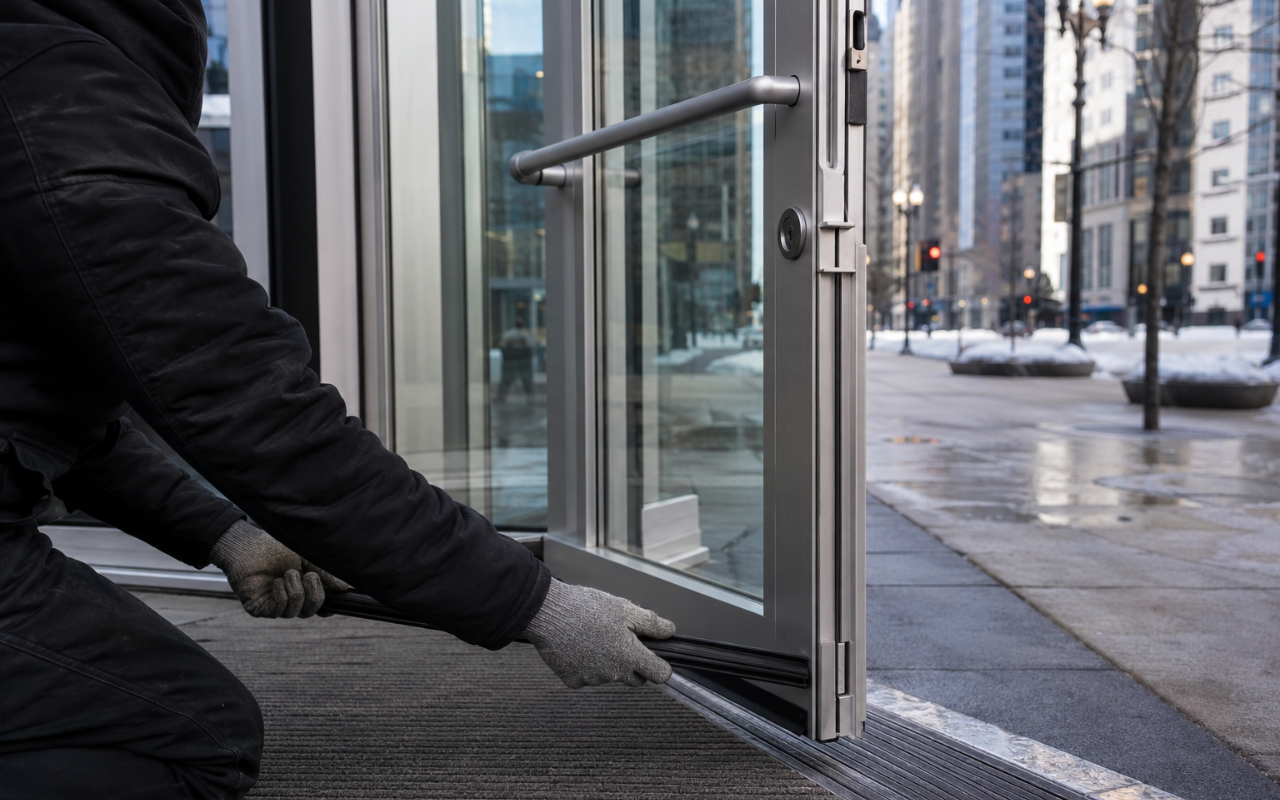
Commercial door weatherproofing in Chicago protects businesses by sealing gaps, reducing drafts, blocking moisture, and helping indoor temperatures stay more stable. It also supports safer, more comfortable entry areas for employees, customers, and visitors during harsh local weather.
Why Does Commercial Door Weatherproofing in Chicago Protect Businesses?
For many commercial properties, weatherproofing starts with checking door edges, thresholds, sweeps, frames, and seals. Businesses need it when drafts, water, cold air, or worn gaskets affect comfort and energy use. The goal is to create a tighter barrier without making the door hard to open or close.
For businesses with busy entrances, loading areas, or exterior doors, Door Weather Stripping can help seal weak points before comfort and efficiency suffer.
Chicago Weather Challenges Require Stronger Door Protection Plans
Chicago’s wind, snow, rain, and temperature swings can weaken commercial door seals faster than mild weather. At Chicago Door People, we look for gaps, brittle gaskets, loose sweeps, and frame issues that let outside air or moisture enter the building.
The National Weather Service records show Chicago has faced extreme cold, heavy snowfall, and high wind gusts. Those conditions make small leaks more serious for storefronts, offices, service entrances, and other commercial spaces.
- Cold drafts near entry doors
- Water seepage after rain or snow
- Light showing around the frame
- Worn rubber, vinyl, or brush seals
- Uneven door contact at the threshold
Commercial door weatherproofing in Chicago should focus on both comfort and door performance. When the seal fits correctly, the door can close better and reduce stress on hardware.
Door Gap Sealing Tips Reduce Drafts and Moisture
Door gap sealing tips work best when each gap is checked by location, size, and cause. A gap at the bottom needs a different solution than a gap along the jamb, hinge side, or meeting edge.
Start by checking for visible daylight, air movement, loose thresholds, and worn sweep contact. Then clean the surface before adding new sealing materials. Dirt, rust, old adhesive, and moisture can stop new products from bonding correctly.
- Use a door sweep for bottom gaps.
- Use gaskets for side and top edges.
- Use caulk for stationary frame cracks.
- Use threshold adjustment for floor-level gaps.
- Replace crushed seals instead of layering tape.
The U.S. Department of Energy explains that weatherstripping is used around movable parts, while caulk is used for stationary cracks. That difference matters because commercial doors must still open, close, and latch smoothly.
Weather Stripping Types Commercial Properties Should Compare Carefully
Weather stripping types commercial buildings use should match the door material, traffic level, and exposure. A busy exterior entrance often needs stronger sealing than a low-use interior access point or protected side door.
Rubber and vinyl gaskets are common for exterior doors because they stay flexible and create a strong compression seal. Brush seals can help at uneven edges or moving parts. Bulb seals can cushion contact when the door closes.
Felt and foam may help with light-duty needs, but they can wear faster in high-traffic areas. For stronger results, review Benefits of Weather Stripping Commercial Doors before choosing a material.
- Rubber gaskets for durable compression
- Vinyl seals for exterior resistance
- Brush seals for uneven contact areas
- Door sweeps for bottom air leaks
- Bulb seals for cushioned closure
The right material should seal well without scraping, dragging, or stopping the latch from catching.
Professional Commercial Door Weatherproofing in Chicago Improves Efficiency
Professional commercial door weatherproofing in Chicago improves efficiency by finding the weak points that quick fixes often miss. With Chicago Door People, you get a careful review of the door, frame, threshold, sweep, and seal contact before work begins.
Energy loss through doors can happen when heated or cooled air escapes through gaps. ENERGY STAR notes that sealing air leaks and adding insulation can improve comfort and energy efficiency. For commercial spaces, tighter doors can also reduce cold spots near entrances.
A commercial door weatherproofing service in Chicago may include seal replacement, sweep installation, threshold adjustment, gasket fitting, and door alignment checks. The best next step is to request guidance through Door Weather Stripping Chicago when drafts or leaks keep returning.
Proper seal contact helps reduce air movement while keeping the door usable for daily traffic.
Clear Booking Steps Prepare Your Door Weatherproofing Appointment
A clear process helps business owners understand what happens before, during, and after the appointment. When customers contact Chicago Door People, we ask about the door type, the problem, the location of the gap, and any signs of water or drafts.
Before work begins, we review what the door is doing and explain practical repair options. The goal is to solve the sealing issue without creating new problems with closing, locking, or foot traffic.
- We ask where drafts, water, or light appear.
- We check the sweep, threshold, frame, and seals.
- We explain which materials fit the door.
- We prepare the area for clean seal contact.
- We review the door after the work is complete.
Our work at Chicago Door People focuses on clear inspection steps, simple explanations, and practical door protection.
Simple Maintenance Keeps Door Seals Working Longer Year-Round
Routine maintenance keeps weatherproofing effective after installation. A commercial door can lose seal contact when hardware loosens, weather stripping compresses, thresholds shift, or debris builds up near the bottom edge.
Check exterior doors after heavy snow, strong winds, and long periods of rain. Remove grit from thresholds, look for cracked gaskets, and listen for scraping sounds. If the door starts dragging, the seal may wear faster than expected.
Small sealing problems can spread quickly when doors are used many times each day. After a project review with Chicago Door People, we help customers understand which parts need attention now and which parts can be monitored.
Consistent upkeep supports comfort, security, and better long-term door performance.
Frequently Asked Questions
What are common signs commercial doors need sealing?
Common signs include drafts, daylight around the frame, water near the threshold, rising comfort complaints, and worn seals. If these problems appear often, review Door Weather Stripping to understand practical sealing options.
Which weather stripping works best for busy commercial entrances?
Busy commercial entrances usually need durable gaskets, sweeps, or brush seals that handle repeated use. The best choice depends on the door type, traffic level, threshold condition, and exposure to wind, rain, snow, or direct outdoor air.
Can weatherproofing help reduce energy loss through doors?
Yes, weatherproofing can help reduce energy loss through doors by limiting uncontrolled air movement. Sealed doors help heated or cooled air stay indoors, which can support comfort and lower HVAC strain in commercial spaces.
How often should commercial door seals be inspected?
Commercial door seals should be inspected during seasonal changes and after harsh weather. For more local guidance, visit Door Weather Stripping Chicago and look for signs like cracking, peeling, loose sweeps, or uneven closure.
When should a business choose professional sealing help?
A business should choose professional help when drafts return, water enters, or the door no longer closes evenly. Professional review through Contact can help identify whether seals, sweeps, thresholds, or alignment need attention.
Schedule Door Care Before Weather Creates Bigger Problems
Commercial door weatherproofing in Chicago is easier to manage before drafts, moisture, and energy waste become daily issues. To protect your entry and improve comfort, contact our team through Contact and ask about the next practical step for your commercial doors.