
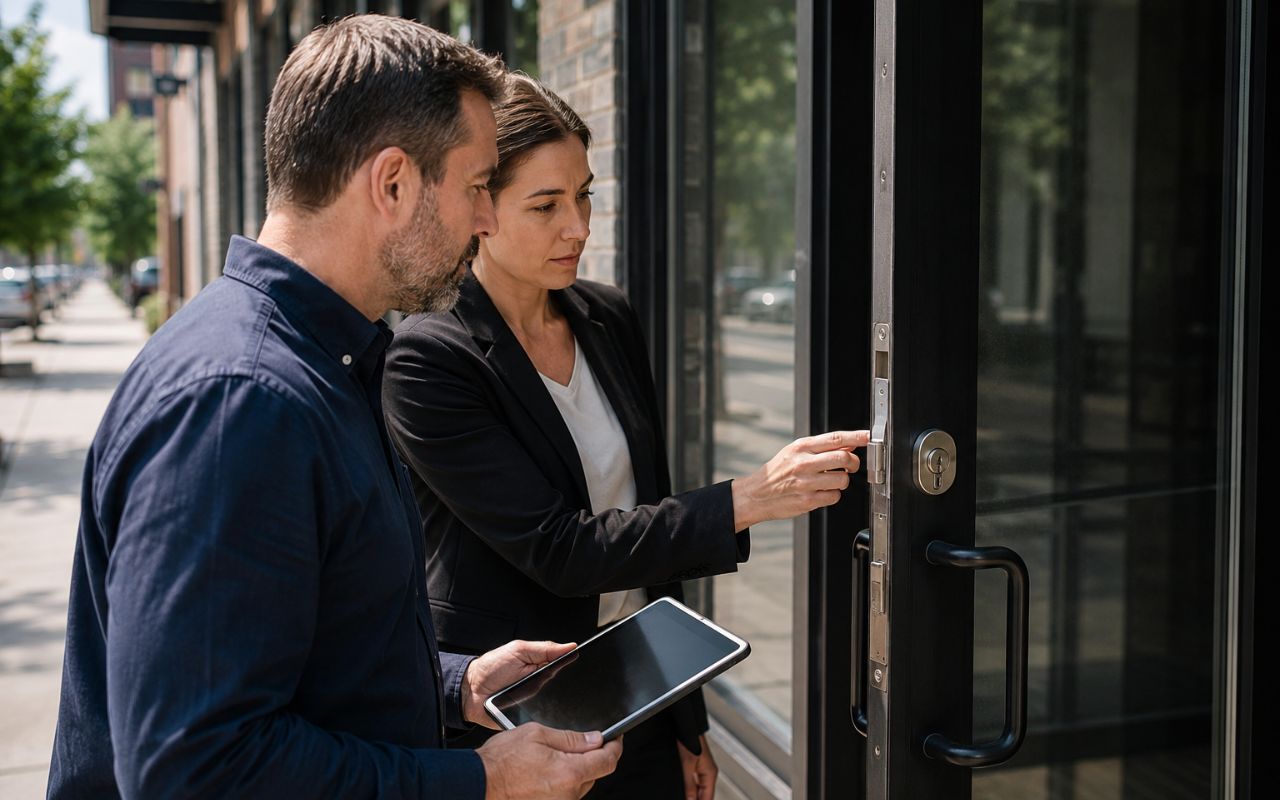
Summer is a smart time to improve busy business entrances. At Chicago Door People, we know summer entry projects need strong security, clean style, and clear planning. Therefore, this guide explains safer options, useful timing, and practical choices for commercial properties across Chicago.
How Can Commercial Door Upgrades Chicago Summer 2026 Protect Businesses?
Commercial door upgrades Chicago summer 2026 protect businesses by improving security, access, energy control, and daily door performance before heavy seasonal traffic. The right upgrade can strengthen entry points, reduce repair issues, and help customers feel safer from the first step inside.
Commercial door upgrades Chicago summer 2026 means planned improvements to business entry doors, frames, glass, locks, hardware, and access systems before or during summer. At Chicago Door People, we use this planning term for owners who need safer entrances, smoother access, and fewer door problems during busy Chicago conditions.
Plan Commercial Door Upgrades Chicago Summer 2026 With Confidence
A strong plan starts with the door problems you need to solve first. Commercial door upgrades Chicago summer 2026 work best when security, airflow, access, and daily traffic are reviewed together. As a result, each upgrade supports safety, comfort, and long-term use.
First, check how each entrance performs during opening, closing, locking, and peak traffic. Then, review frame strength, glass condition, hardware wear, and weather sealing. According to the U.S. Energy Information Administration, U.S. commercial buildings covered about 96.4 billion square feet in 2018, so small entry choices can affect large spaces.
At Chicago Door People, we help owners focus on the highest-risk openings first. Therefore, a clear walk-through should include:
- Main customer entrance condition
- Employee entrance lock control
- Loading dock door movement
- Frame, hinge, and closer wear
- Glass, seal, and threshold gaps
A durable entry door can reduce forced-entry risk when its frame, lock, hinge, and glass work together.
Compare Secure Door Types For Chicago Business Entrances
Different door types solve different business problems. Steel doors support strength, aluminum doors support clean storefront style, and glass systems support light with controlled visibility. Therefore, the best choice depends on traffic, risk level, design needs, and how the space is used.
Common types of commercial door upgrades include steel security doors, fire-rated doors, aluminum storefront systems, reinforced glass doors, roll-up doors, and automatic entries. Each choice should match the opening, building use, and customer flow.
- Choose steel doors when impact resistance is the main concern.
- Choose aluminum storefront doors when appearance and visibility matter.
- Choose reinforced glass when light and security must work together.
- Choose roll-up doors for loading areas and back-of-house access.
- Choose automatic entries when touch-free movement improves daily access.
| Upgrade Choice | Best Use |
|---|---|
| Steel security door | Back entrances, service doors, and high-impact areas |
| Aluminum storefront system | Retail fronts, offices, and customer-facing entrances |
| Reinforced glass entry | Spaces that need daylight, visibility, and added protection |
| Automatic entry system | High-traffic entrances and touch-free access points |
Accessible door planning should include opening width, approach space, hardware height, and clear movement. The 2010 ADA Standards say door openings on accessible routes need 32 inches minimum of clear width.
For storefront projects, review aluminum storefront door guidance before selecting frames, glass, and finishes.
Key Takeaway: A good plan starts with real door problems. Then, the right door type connects security, access, appearance, and daily business needs.
Select Strong Security Features For Safer Daily Access
Security features should make the entrance harder to force open without making daily access difficult. Therefore, the best setup combines strong materials, reliable hardware, and simple access control. This balanced approach helps protect staff, customers, inventory, and business records.
Reinforced frames are often as important as the door slab. Also, hinges, closers, panic hardware, and locks must match the door type. Weak hardware can reduce the value of a strong door.
- Use reinforced frames for better resistance at the opening.
- Add multi-point locking when the door design allows it.
- Choose laminated or tempered glass for stronger storefront panels.
- Install panic hardware where safe exit movement is required.
- Consider keyless entry for employee-only doors.
Smart access can also help managers track who enters staff areas. However, access systems should stay easy to use. Complicated systems often create staff frustration and blocked workflows.
Security works best when the opening is inspected as one system, not separate parts.
Measure Return Potential Through Energy And Durability Gains
Return on investment comes from lower repair risk, better security, reduced energy waste, and longer door life. Therefore, the best ROI commercial door upgrades in Chicago are usually the upgrades that solve repeated problems instead of only changing appearance.
Energy control matters during Chicago summers because gaps, weak seals, and poorly closing doors can strain cooling systems. The EIA reports that space heating used about 32% of energy use in U.S. commercial buildings in 2018. Good sealing also supports comfort during every season.
Next, compare durability factors before deciding:
- Higher-grade metals can resist dents and heavy use.
- Better closers can reduce slamming and frame stress.
- Improved seals can reduce drafts and outside dust.
- Reliable locks can lower security service calls.
- Proper installation can prevent early alignment issues.
Total value depends on door use, exposure, traffic, security risk, and maintenance needs. Therefore, owners should choose upgrades that match the building instead of copying another property.
Key Takeaway: Stronger security features protect daily access. Meanwhile, ROI improves when upgrades reduce repairs, energy waste, and repeated service problems.
Schedule Summer Installations Around Busy Chicago Business Hours
A practical timeline reduces downtime by planning measurements, materials, permits, and installation phases early. Therefore, a commercial door upgrade timeline summer plan should begin before peak demand. This approach gives owners more control over scheduling, access, and customer flow.
Start with a site review before summer pressure builds. Then, confirm door size, frame condition, glass needs, hardware choices, and electrical needs. Automatic doors may also need coordination with power or access control work.
- Inspect each entrance and rank urgent openings first.
- Confirm door type, finish, hardware, and access features.
- Review any permit or building coordination needs.
- Order materials before the busiest summer weeks.
- Install in phases when the business must stay open.
- Test locks, closers, seals, and customer movement after installation.
A summer upgrade plan works best when measuring, ordering, permits, and installation are sequenced before peak demand.
For major replacement work, visit full entry replacement help to review practical replacement options.
Choose A Local Contractor For Clear Project Control
The right contractor should explain the door condition, the needed upgrade, and the expected work sequence in simple terms. Therefore, choosing a commercial door upgrade contractor in Chicago, IL should involve communication, site review quality, safety awareness, and post-installation support.
At Chicago Door People, we keep the process clear from the first review. We check measurements, frames, locks, closers, glass, thresholds, and daily use. Then, we explain practical options without pushing upgrades that do not fit the building.
Look for a contractor who can:
- Inspect the full door system before recommending work.
- Explain repair, upgrade, and replacement differences.
- Coordinate work around open business hours.
- Help with storefront, aluminum, steel, and glass systems.
- Guide customers through maintenance needs after installation.
Reliable communication can prevent wrong materials, missed access needs, and avoidable downtime.
Key Takeaway: A clear timeline protects business flow. Also, the right local contractor helps each upgrade match the site, schedule, and safety need.
Frequently Asked Questions
How do I know when my business needs a door upgrade?
You may need an upgrade when doors drag, slam, fail to lock, leak air, or look damaged. Start with modern entry improvements to compare safer options.
When should I replace a commercial door instead of repairing it?
Replacement may make sense when the frame is weak, the door is warped, or security problems keep returning. Review full entry replacement help before deciding.
What happens if my storefront door is outdated?
An outdated storefront door can hurt security, access, comfort, and first impressions. For customer-facing entrances, aluminum storefront door guidance can help you compare materials.
Why is summer a good time for entrance improvements?
Summer often allows easier scheduling, safer work conditions, and better planning before colder weather. For timing questions, use the schedule a site visit page.
How do I choose the right upgrade for my building?
Start by matching the door to your traffic, security risk, glass needs, and daily use. Then, explore local door service details for service options.
Start Stronger Entry Planning With Our Team Today
Better doors help a business feel safer, work smoother, and look more prepared. Therefore, plan early, review each entrance, and choose upgrades that fit daily use. At Chicago Door People, we are ready to help you schedule a site visit and move forward with confidence.