
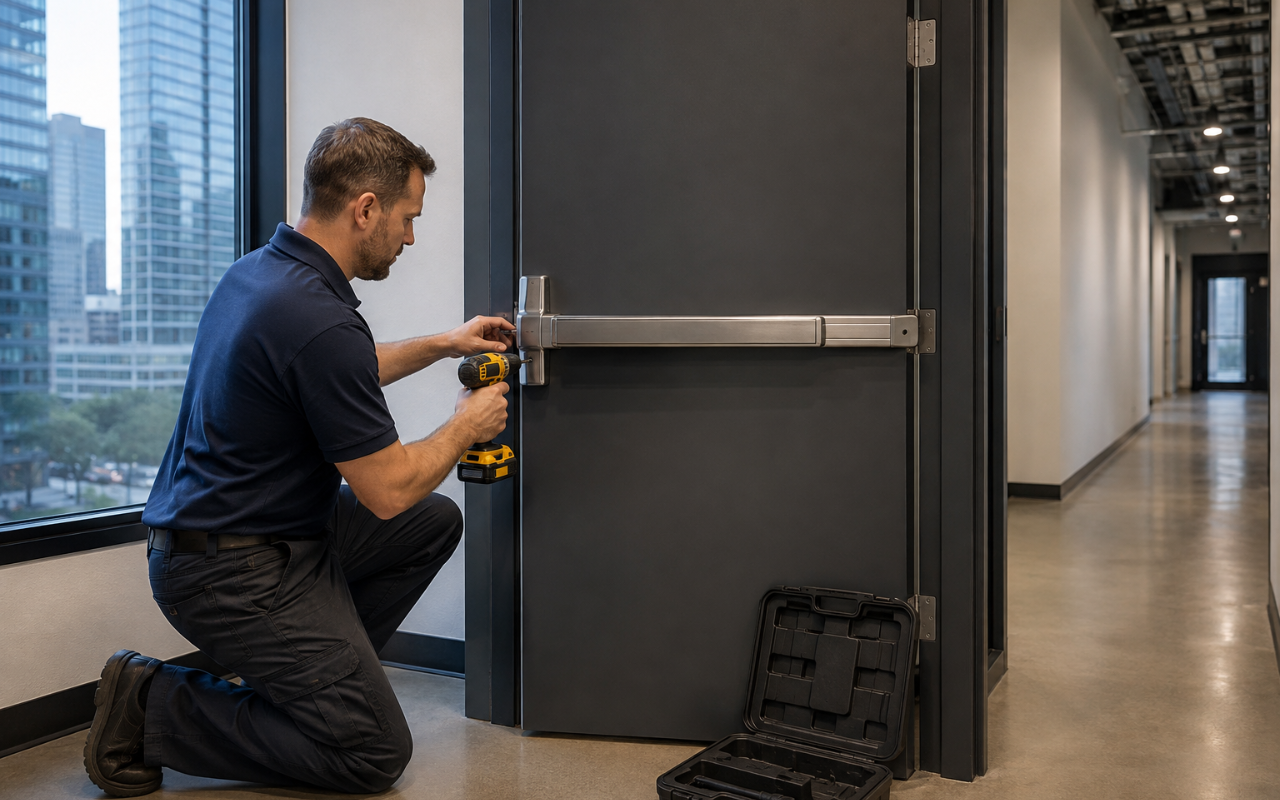
Panic bar installation is needed when a commercial exit door must open fast from the inside during an emergency. The right device helps people leave without keys, tight turning, or special knowledge while supporting safer egress for customers, staff, and visitors.
Emergency doors can fail at the worst moment when hardware is loose, blocked, or not matched to the door. For Chicago businesses, safe exits also support smoother inspections and daily operations.
If your exit device sticks or looks worn, our Panic Bar Repair in Chicago for Safer Exits page can help you decide the next step.
Choose Correct Hardware for Safer Exits
Choosing the correct hardware starts with the door’s role, occupant use, and egress path. A panic device is built for fast emergency release, while a basic push bar may only support daily convenience.
That panic bar vs push bar difference matters during inspections and real emergencies. At Chicago Door People, we check the door swing, frame condition, latch type, and traffic needs before recommending hardware.
A safer exit door should feel simple to use, even when someone is stressed or moving quickly.
Hardware Planning Checks
- Use panic hardware for emergency egress doors.
- Use compatible fire exit hardware on rated doors.
- Check latch alignment before final mounting.
- Keep exit paths clear of storage and displays.
Review Code Concerns Before Installation
Code review helps owners avoid installing the wrong device on an exit door. Exit device installation requirements can involve door swing, clear opening, hardware height, latch release, labels, and the condition of the path leading outside.
Chicago facilities may need added attention because local inspections focus on safe egress and working hardware. OSHA states that employees must be able to open exit route doors from the inside without keys, tools, or special knowledge.
The U.S. Access Board also explains that operable parts on accessible routes must be usable by building occupants.
During code-focused projects, our team explains what we can verify on the door and what may need review by the authority having jurisdiction. That approach supports panic bar hardware code compliance in Chicago without guessing.
Key Takeaway
Panic hardware is not just a convenience feature. Door use, occupancy, fire rating, accessibility, latch function, and local review can all affect the right installation plan.
Compare Exit Door Problems and Next Steps
Exit hardware problems can come from the device, the door, the frame, or the surrounding exit path. A clear comparison helps facility teams decide when repair, replacement, or installation should be reviewed.
Panic Bar Installation Guide
| Problem | Why It Matters | Helpful Next Step |
|---|---|---|
| Door is hard to open from inside | People may struggle to exit quickly during an emergency. | Review hardware type, latch release, and door condition. |
| Push bar used on an emergency exit | A basic push bar may not meet panic hardware needs. | Compare panic bar vs push bar difference before replacing hardware. |
| Latch sticks or misses the strike | The door may not secure or release correctly. | Check alignment, hinges, frame, and strike position. |
| Fire-rated door has wrong hardware | Incorrect hardware can affect the opening’s safety function. | Review fire door requirements and compatible exit hardware. |
| Exit path is blocked | Even working hardware cannot help if the route is obstructed. | Clear storage, carts, displays, and signs from the exit path. |
Prepare the Door Before Mounting Hardware
Good preparation protects the device before installation begins. A panic bar can bind, drag, or fail to latch when the door is warped, the hinges are loose, or the frame is out of square.
Before drilling, we review the door material, swing direction, mounting height, and strike location. Small checks can prevent rework, especially on hollow metal, storefront, and other commercial doors.
If the full door needs attention, our Commercial Door Repair in Chicago IL | Same-Day Service page explains related repair options.
Proper alignment is one of the most important parts of a safe installation. A device that looks secure still needs smooth latch release and a clean return after each push.
Key Takeaway
A panic bar depends on the door around it. Hinges, frame alignment, strike position, door swing, and mounting height should be checked before installation.
Follow a Professional Installation Process
A professional appointment gives customers a clearer process from the first call to final testing. When customers contact Chicago Door People, we ask about the door type, current hardware, building use, and any inspection concern.
Typical Installation Steps
- Review photos or details before scheduling.
- Check the door, frame, hinges, and latch area.
- Explain hardware options before work begins.
- Install and adjust the exit device.
- Test the door from inside and outside.
With Chicago Door People, customers receive practical guidance before the work starts, not vague hardware terms. For fire-rated openings, we may also point customers toward Fire Door Compliance in Chicago | Safety Guide when the opening needs a broader safety review.
Test Exit Hardware After Installation
Testing confirms that the device opens, latches, and resets correctly after installation. A panic bar should release with steady pressure, avoid sticking, and allow people to leave without confusion.
After the work is complete, we recommend simple checks that support daily safety. Facility teams should look for loose covers, rubbing sounds, latch drag, damaged strikes, blocked exit paths, and alarm issues when the device includes electrical features.
Routine Exit Hardware Checks
- Push the bar fully during routine checks.
- Confirm the door closes and latches.
- Report sticking, scraping, or delayed release.
- Keep carts, boxes, and signs away from exits.
For businesses looking for a panic bar installation service in Chicago, IL, testing is not an extra detail. It is the step that proves the exit device is ready for use.
Key Takeaway
Installation is not complete until the door is tested. The device should release, close, latch, and reset without sticking, scraping, or blocking the exit route.
Frequently Asked Questions
What doors usually need panic bar hardware installed?
Commercial exit doors often need panic hardware when they serve public areas, assembly spaces, schools, or higher-occupancy routes. The exact need depends on building use and adopted code. For damaged existing devices, review Panic Bar Repair in Chicago for Safer Exits.
Can a push bar replace a panic bar?
A push bar should not replace a panic bar when the door needs code-compliant emergency egress hardware. Push bars may help with daily access, but panic devices are designed for faster emergency release and stricter life-safety use.
How do I know if my exit device complies?
Start by checking door swing, latch release, mounting height, labels, and clear access to the exit route. A professional inspection can identify visible issues. For related code planning, see Fire Door Compliance in Chicago | Safety Guide.
Should damaged panic hardware be repaired or replaced?
The answer depends on the damage, age, parts, and door condition. Loose covers, bad latches, or worn springs may be repairable. Severe damage or wrong hardware may require replacement to restore safe emergency egress.
Who should I contact for commercial door help?
Contact a commercial door team that can review the door, frame, hardware, and exit path together. To request help with installation or related door issues, use Request a Commercial Door Estimate.
Schedule Panic Bar Help Before Exit Issues Grow
Waiting can turn a small latch issue into a failed inspection or unsafe exit. Before scheduling with Chicago Door People, customers can gather photos, door details, and any inspection notes.
Then contact our team through Request a Commercial Door Estimate so we can review the safest next step.