
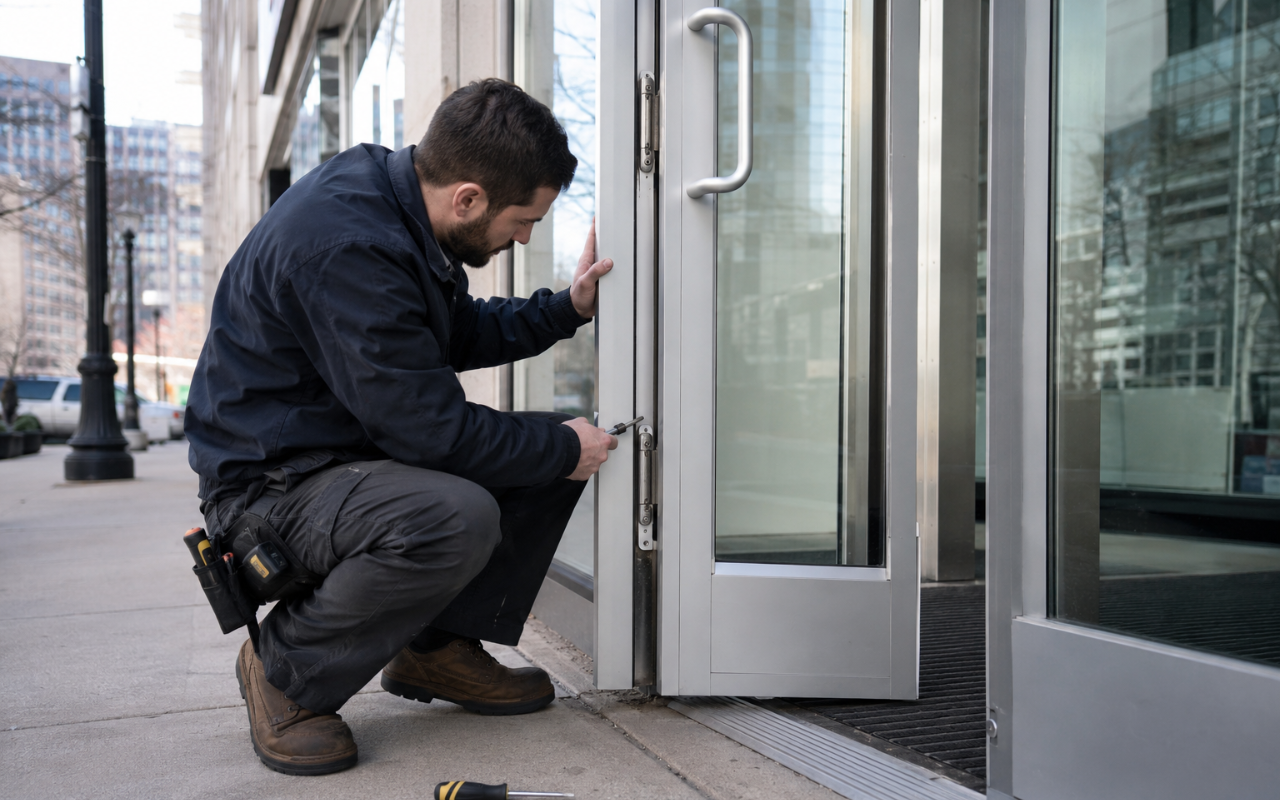
Knowing how to fix sticking commercial door in Chicago starts with finding the cause, not forcing the door. Check hinges, frame gaps, thresholds, seals, and weather effects first. Then adjust, lubricate, or call a qualified repair team when the door affects safety, access, or security.
How to Fix Sticking Commercial Door in Chicago Safely?
A sticking commercial door is usually a door that no longer moves cleanly through its frame. Business owners, property managers, and facility teams need repair when friction slows entry, blocks closing, or affects locks. The right solution may involve alignment, hardware care, moisture control, or frame correction.
Review our Commercial Door Repair in Chicago IL service.
Checks Show How to Fix Sticking Commercial Door in Chicago
A careful first check helps you understand whether the door is sticking because of loose hardware, frame movement, swelling material, or worn parts. When customers contact Chicago Door People, we first listen for where the door catches and how often the problem happens.
Do not force a commercial door open or closed. Extra pressure can damage hinges, closers, locks, glass, or the frame. Instead, look for clear signs of rubbing and note when the problem gets worse.
- Scrape marks near the top corner
- Uneven gaps around the frame
- Loose hinge screws or worn pivots
- Threshold rubbing near the floor
- Latch trouble when the door closes
Learning how to fix sticking commercial door in Chicago helps you decide whether a simple adjustment is enough. For step-by-step alignment support, see our Fixing Door Alignment: A Step-by-Step Guide.
Chicago Weather Explains Commercial Door Alignment Issues Clearly
Chicago weather can change door clearances because heat, cold, and moisture affect materials differently. Wood can swell during humid months, while metal parts may expand, contract, rust, or shift. These changes often create commercial door alignment issues that appear worse during seasonal swings.
At Chicago Door People, we check the door path, hinge side, latch side, and threshold before recommending any repair. A door that sticks only in summer may point to humidity-related swelling. A door that sticks after winter weather may have seal, closer, or frame stress.
The U.S. Environmental Protection Agency recommends keeping indoor humidity between 30 and 50 percent for healthier moisture control. That guidance can also help reduce swelling around interior entry areas when humidity door expansion affects wood doors, seals, and nearby trim.
Proper Maintenance Reduces Door Binding Causes All Year
Regular care reduces door binding causes before they interrupt customers, staff, deliveries, or security checks. Small issues usually begin with friction, loose screws, dry hinges, dirty thresholds, or worn weatherstripping. However, those small issues can become bigger problems when ignored.
With Chicago Door People, you get clear guidance before repair work begins. We explain what we see, what may be causing the sticking, and which parts may need adjustment. Simple maintenance can include:
- Tightening hinge and closer screws
- Cleaning threshold dirt and debris
- Lubricating hinge pins and moving parts
- Checking weatherstripping for pressure points
- Watching for new gaps or frame movement
Maintenance should happen before the door becomes hard to lock. For ongoing care ideas, visit our Commercial Door Maintenance in Chicago Guide.
Careful Adjustments Resolve Humidity Door Expansion Without Guesswork
Humidity door expansion should be handled with small checks before cutting, sanding, or replacing parts. A swollen door may seem simple, but trimming too soon can create wide gaps later when drier weather returns. The safer first step is finding the exact pressure point.
Start by checking whether the door rubs along the latch side, hinge side, top rail, or threshold. Then inspect seals and weatherstripping. Over-compressed seals can make a door feel swollen even when the slab or frame is not the main issue.
Useful next steps include measuring the gap pattern, checking indoor moisture, and looking for peeling paint or exposed wood. When the door has metal hardware, rust or dirt buildup may also add friction. Commercial door repair sticking in Chicago often requires both weather awareness and hardware adjustment.
Our Repair Process Guides Safer Sticking Door Decisions
A clear repair process helps you know what to expect before anyone adjusts the door. When you choose Chicago Door People, we ask practical questions, review the sticking point, check the hardware, and explain whether the issue appears minor, seasonal, structural, or safety-related.
During the appointment, we focus on the parts that affect daily use. That may include hinges, pivots, closers, locks, frame anchors, thresholds, and seals. We avoid guessing because the cause must match the repair.
- We ask when the door started sticking.
- We inspect where the door rubs or binds.
- We check hinges, frame gaps, and hardware.
- We explain repair options before work begins.
- We test the swing, latch, and closing action.
The U.S. Access Board notes that accessible doors need proper clear width, maneuvering clearance, threshold height, hardware access, and operating force. This matters when a sticking commercial door affects safe entry for customers and staff.
Frequently Asked Questions
Why does my commercial door stick during summer?
Summer sticking often comes from humidity, swollen materials, tight seals, or slight frame movement. Moist air can increase friction where the door meets the frame. If the door scrapes, drags, or will not latch, review Fixing Door Alignment: A Step-by-Step Guide.
Can loose hinges cause a commercial door to bind?
Yes, loose hinges can let the door sag and rub against the frame or threshold. Tightening screws may help, but stripped holes or worn hinges need more care. A dragging door can also point to commercial door alignment issues or frame movement.
When should I stop trying a DIY door repair?
Stop when the door affects locks, panic hardware, glass, access, or safety. Also stop if the frame looks bent, cracked, or shifted. For help with commercial door repair sticking in Chicago, use our contact our door team page.
Does lubrication fix every sticking commercial door problem?
No, lubrication only helps when dry hinges, pins, tracks, or moving parts create friction. It will not correct a warped door, shifted frame, damaged closer, or major threshold problem. Use a proper lubricant, then test the door without forcing it.
How often should commercial doors be inspected in Chicago?
Many businesses benefit from seasonal checks because Chicago weather changes door movement throughout the year. Look after hinges, seals, thresholds, and closers before small issues grow. Our Commercial Door Maintenance in Chicago Guide explains useful maintenance steps.
Restore Smooth Entry Before Door Problems Spread Further
A sticking commercial door can slow business, weaken security, and create access concerns. Our team at Chicago Door People can inspect the cause, explain safe options, and help you choose the right next step. For practical help with how to fix sticking commercial door in Chicago, contact our door team today.
References
Learning how to fix sticking commercial door in Chicago helps you decide whether a simple adjustment is enough. For step-by-step alignment support, see our Fixing Door Alignment: A Step-by-Step Guide.
Chicago Weather Explains Commercial Door Alignment Issues Clearly
Chicago weather can change door clearances because heat, cold, and moisture affect materials differently. Wood can swell during humid months, while metal parts may expand, contract, rust, or shift. These changes often create commercial door alignment issues that appear worse during seasonal swings.
At Chicago Door People, we check the door path, hinge side, latch side, and threshold before recommending any repair. A door that sticks only in summer may point to humidity-related swelling. A door that sticks after winter weather may have seal, closer, or frame stress.
The U.S. Environmental Protection Agency recommends keeping indoor humidity between 30 and 50 percent for healthier moisture control. That guidance can also help reduce swelling around interior entry areas when humidity door expansion affects wood doors, seals, and nearby trim.
Proper Maintenance Reduces Door Binding Causes All Year
Regular care reduces door binding causes before they interrupt customers, staff, deliveries, or security checks. Small issues usually begin with friction, loose screws, dry hinges, dirty thresholds, or worn weatherstripping. However, those small issues can become bigger problems when ignored.
With Chicago Door People, you get clear guidance before repair work begins. We explain what we see, what may be causing the sticking, and which parts may need adjustment. Simple maintenance can include:
- Tightening hinge and closer screws
- Cleaning threshold dirt and debris
- Lubricating hinge pins and moving parts
- Checking weatherstripping for pressure points
- Watching for new gaps or frame movement
Maintenance should happen before the door becomes hard to lock. For ongoing care ideas, visit our Commercial Door Maintenance in Chicago Guide.
Careful Adjustments Resolve Humidity Door Expansion Without Guesswork
Humidity door expansion should be handled with small checks before cutting, sanding, or replacing parts. A swollen door may seem simple, but trimming too soon can create wide gaps later when drier weather returns. The safer first step is finding the exact pressure point.
Start by checking whether the door rubs along the latch side, hinge side, top rail, or threshold. Then inspect seals and weatherstripping. Over-compressed seals can make a door feel swollen even when the slab or frame is not the main issue.
Useful next steps include measuring the gap pattern, checking indoor moisture, and looking for peeling paint or exposed wood. When the door has metal hardware, rust or dirt buildup may also add friction. Commercial door repair sticking in Chicago often requires both weather awareness and hardware adjustment.
Our Repair Process Guides Safer Sticking Door Decisions
A clear repair process helps you know what to expect before anyone adjusts the door. When you choose Chicago Door People, we ask practical questions, review the sticking point, check the hardware, and explain whether the issue appears minor, seasonal, structural, or safety-related.
During the appointment, we focus on the parts that affect daily use. That may include hinges, pivots, closers, locks, frame anchors, thresholds, and seals. We avoid guessing because the cause must match the repair.
- We ask when the door started sticking.
- We inspect where the door rubs or binds.
- We check hinges, frame gaps, and hardware.
- We explain repair options before work begins.
- We test the swing, latch, and closing action.
The U.S. Access Board notes that accessible doors need proper clear width, maneuvering clearance, threshold height, hardware access, and operating force. This matters when a sticking commercial door affects safe entry for customers and staff.
Frequently Asked Questions
Why does my commercial door stick during summer?
Summer sticking often comes from humidity, swollen materials, tight seals, or slight frame movement. Moist air can increase friction where the door meets the frame. If the door scrapes, drags, or will not latch, review Fixing Door Alignment: A Step-by-Step Guide.
Can loose hinges cause a commercial door to bind?
Yes, loose hinges can let the door sag and rub against the frame or threshold. Tightening screws may help, but stripped holes or worn hinges need more care. A dragging door can also point to commercial door alignment issues or frame movement.
When should I stop trying a DIY door repair?
Stop when the door affects locks, panic hardware, glass, access, or safety. Also stop if the frame looks bent, cracked, or shifted. For help with commercial door repair sticking in Chicago, use our contact our door team page.
Does lubrication fix every sticking commercial door problem?
No, lubrication only helps when dry hinges, pins, tracks, or moving parts create friction. It will not correct a warped door, shifted frame, damaged closer, or major threshold problem. Use a proper lubricant, then test the door without forcing it.
How often should commercial doors be inspected in Chicago?
Many businesses benefit from seasonal checks because Chicago weather changes door movement throughout the year. Look after hinges, seals, thresholds, and closers before small issues grow. Our Commercial Door Maintenance in Chicago Guide explains useful maintenance steps.
Restore Smooth Entry Before Door Problems Spread Further
A sticking commercial door can slow business, weaken security, and create access concerns. Our team at Chicago Door People can inspect the cause, explain safe options, and help you choose the right next step. For practical help with how to fix sticking commercial door in Chicago, contact our door team today.