
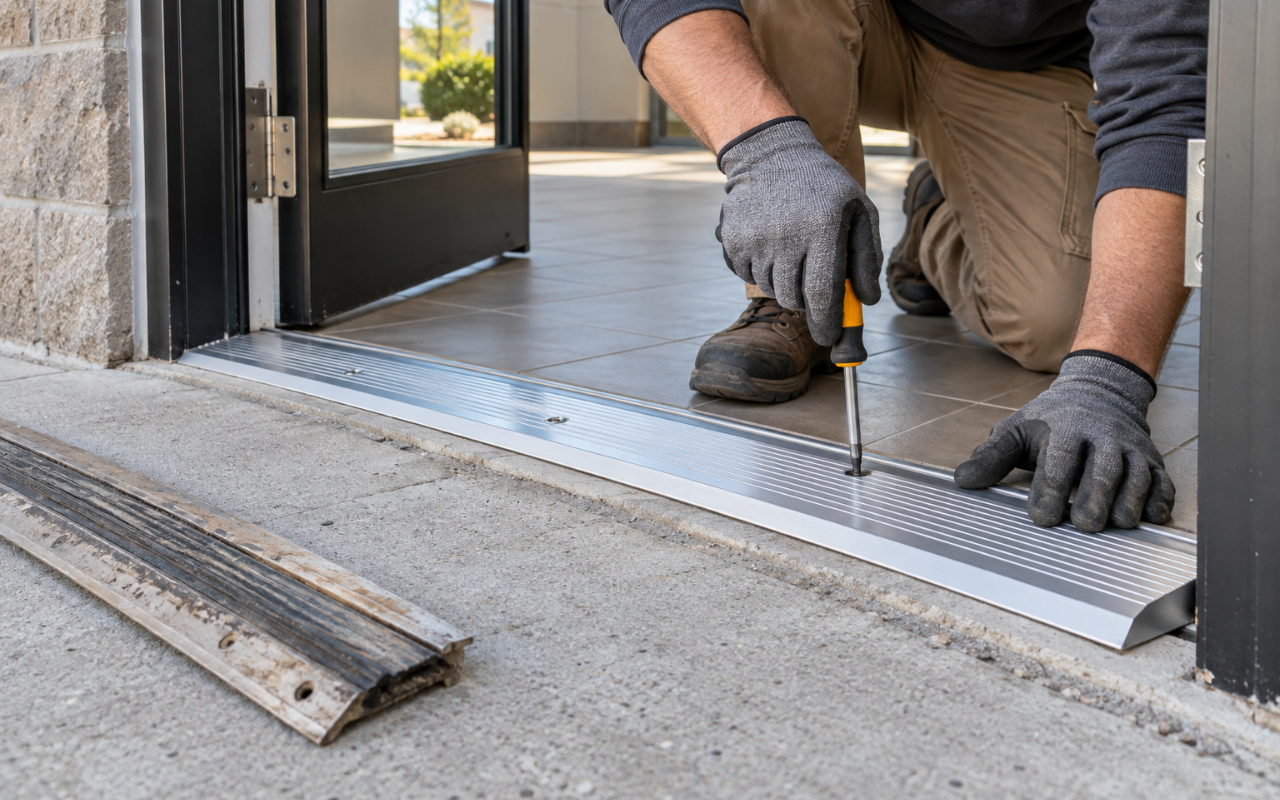
- Replace the threshold when it is cracked, bent, loose, or badly corroded, since patching rarely restores a tight seal.
- Replace it when daylight, water, or snow gets under the door even with a good sweep or door bottom.
- Replace it when it becomes a trip hazard or exceeds accessibility limits. New thresholds on accessible routes are generally limited to 1/2 inch high.
- Replace it when the door drags on a raised or warped section.
- Best timing is before snow and road salt season, when corrosion and freeze-thaw damage speed up.
The threshold takes more punishment than any other part of an entrance. Foot traffic, carts, dollies, snow shovels, and de-icing salt all grind against it every day, and Chicago winters make that wear worse. If your entry already lets in water or catches heels, you can schedule a threshold assessment before the first snowfall.
Signs a Door Threshold Needs Replacing
Look closely at the floor line on each exterior and high-traffic door:
- Cracks, splits, or pieces of the threshold breaking away.
- Pitting, white residue, or flaking from salt corrosion on aluminum.
- Loose fasteners or a threshold that rocks when stepped on.
- Water staining or rust on the floor just inside the door.
- A raised edge that catches carts, wheelchairs, or shoes.
How Road Salt and Snow Wear Down Thresholds
De-icing salt tracked in on boots sits in the grooves of aluminum thresholds and slowly eats into the metal. Meltwater then seeps under the threshold, where repeated freezing and thawing can lift or loosen it from the floor.
Snow removal adds physical damage. Shovels and snow blowers can bend leading edges, and heavy carts can flatten the profile over time. Once the shape changes, the sweep or door bottom no longer seals evenly.
ADA Threshold Height Requirements in Plain Terms
Under the 2010 ADA Standards, thresholds at doorways on accessible routes are limited to 1/2 inch high. Changes in level between 1/4 inch and 1/2 inch must be beveled no steeper than 1:2. If you are unsure whether yours complies, you can get a threshold quote that includes a height check.
There is an exception for existing or altered thresholds up to 3/4 inch high, as long as both sides are beveled at no more than 1:2. Rises above 1/2 inch otherwise need to be treated as ramps. Replacement is often the easiest way to bring an older entrance into line.
How to Replace a Door Threshold on a Commercial Entry
- Measure the opening width, door bottom clearance, and the existing threshold height.
- Remove the old threshold, screws, and any failed sealant or anchors.
- Clean the floor and check for rot, cracks, or uneven concrete.
- Cut the new threshold to fit around the frame stops and jambs.
- Set it in a bed of sealant and fasten it with proper anchors.
- Adjust the sweep or door bottom so it seals without dragging.
Skipping the sealant bed is a common mistake that lets water run under the new threshold within one season.
Choosing the Right Threshold Profile for Each Entrance
Saddle thresholds suit most single entrances, while thresholds with built-in gaskets or interlocking profiles help on exposed exterior doors. Low-profile, beveled designs work best on accessible routes. Heavy-duty extruded aluminum or bronze profiles hold up better where carts and pallet jacks roll through every day. Our comparison of common door threshold types covers the options in detail, and our page on door seal strip options explains how sweeps pair with each profile.
When Threshold Problems Point to a Bigger Door Issue
Sometimes the threshold is only the symptom. A door that has sagged on its hinges will scrape the threshold no matter how many times it is replaced. A bent frame or damaged door bottom can do the same.
At Chicago Door People, we check hinges, closers, and frame alignment before replacing a threshold. When the door itself is beyond repair, our Chicago commercial door replacement service handles the full opening.
Commercial Door Threshold Replacement in Chicago IL Before Snow Season
Restaurants, retail shops, warehouses, and office buildings all depend on entrances that stay dry and safe through winter. Replacing worn thresholds in fall prevents slip hazards, water damage, and drafts once snow arrives. It also gives installers dry weather and mild temperatures, which help sealant cure and anchors set properly.
Our team at Chicago Door People is licensed and insured, and we bring more than 35 years of experience to commercial entrances of every size.
Frequently Asked Questions
What is the maximum threshold height under the ADA?
New thresholds are limited to 1/2 inch, with a 3/4 inch exception for beveled existing ones. The full text is in the 2010 ADA Standards for Accessible Design.
Do all commercial thresholds need a bevel?
Any change in level above 1/4 inch must be beveled at 1:2 or less. This plain-language breakdown of threshold rules explains how ADA and ICC A117.1 compare.
Should I replace the sweep at the same time?
Usually yes. Weatherization guidance recommends choosing door sweeps and thresholds that work together, as noted in these New York State weatherstripping tips.
How long does a threshold replacement take?
Most single doors take a few hours, including sealant and sweep adjustment.
Do you offer emergency service?
Yes. We provide same-day response when a damaged threshold leaves an entrance unsafe or unsecured.
Get Your Entrance Ready for Salt and Snow
A sound, properly sized threshold keeps water out, keeps the floor safe, and helps accessible routes stay compliant. Planning commercial door threshold replacement now avoids emergency calls in the middle of winter. When you are ready, you can book a threshold replacement with Chicago Door People.
References
U.S. Department of Justice: 2010 ADA Standards for Accessible Design