
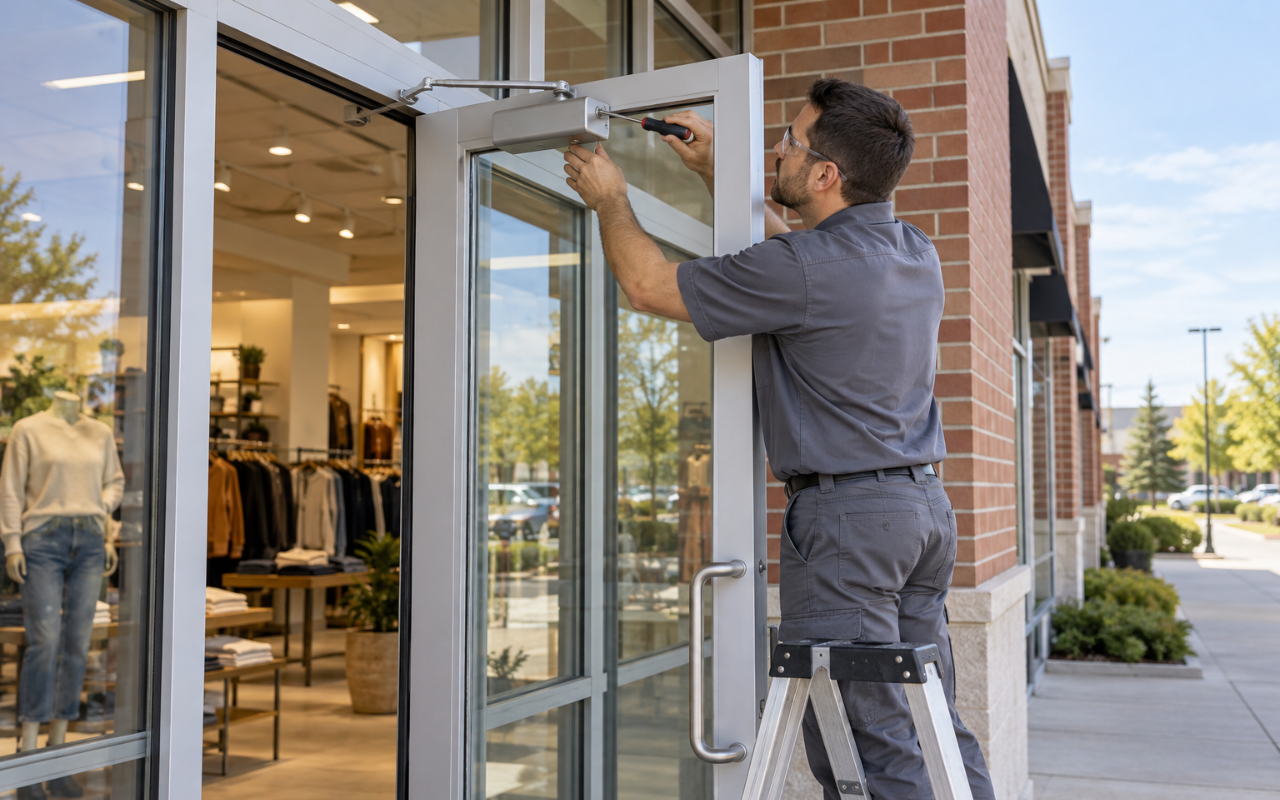
- Doors that drag or rub: worn pivots, a sagging door, or a frame that has shifted.
- Doors that will not latch: a closer set too slow, a misaligned strike, or a deadbolt that no longer lines up.
- Doors that slam or creep shut: closer valves out of adjustment, often worse in cold weather when hydraulic fluid thickens.
- Locks and cylinders that stick or fail, leaving the store unsecured overnight.
- Drafts and gaps from worn pile strips, sweeps, or thresholds.
Schaumburg’s retail corridors see some of the heaviest foot traffic in the region from late November through the holidays, and storefront entrances take the brunt of it. A door that drags, slams, or will not lock is a safety and security problem on the busiest days of the year. Planning aluminum storefront door repair in Schaumburg IL before Black Friday keeps entrances open and secure. You can book a storefront inspection now.
Why Aluminum Doors Drag in Cold Weather
Aluminum expands in heat and contracts in cold, so clearances around a storefront door change with the seasons. A door that was set tight in summer can start rubbing or leave a gap once temperatures fall.
Cold also affects the closer. Hydraulic fluid in many door closers thickens as temperatures drop, which slows the door and keeps it from latching. Ice and salt buildup at the threshold can add friction at the bottom of the door as well.
How to Fix a Storefront Door That Won’t Latch
Work through the causes in order, from simplest to most involved:
- Watch the last few inches of travel. If the door slows and stops short, the latch speed may need adjustment.
- Check that the strike or keeper lines up with the latch or deadbolt.
- Look at the gap along the lock stile. An uneven gap points to a sagging door or worn pivot.
- Check whether thick or misaligned weather stripping is pushing the door back open.
Avoid cranking the closer to full power to force a latch. That can make the door too hard to open for customers and staff.
Aluminum Door Pivot Repair: Top, Bottom, and Intermediate
Most storefront doors hang on pivots rather than butt hinges. When a bottom pivot wears, the door drops and drags at the lock side. If your entrance already rubs or sags, you can request same-day storefront service to prevent further damage.
Tall doors also use intermediate pivots along the hinge stile to keep the door straight. A loose top pivot or a worn intermediate pivot lets the door twist, which strains the closer and wears the weather strip unevenly. Replacing worn pivots and re-shimming the door usually restores smooth operation.
Closers, Accessibility, and Holiday Shopper Traffic
Closer adjustment is not just about comfort. Under accessibility guidance, a door with a closer should take at least 5 seconds to move from 90 degrees open to 12 degrees from closed, so people using wheelchairs, walkers, or strollers can get through safely.
Exterior opening force is not set by the ADA Standards, but entrances that must be accessible should open with the least force practical. A properly sized closer balances easy opening with reliable latching in both summer and winter.
Getting Storefronts Ready Before Black Friday
Black Friday falls on November 27 this year, and the weeks before it are the best time to check every entrance. Test latching at opening and closing time, look for drag marks on the threshold, and confirm that locks work smoothly with every key.
At Chicago Door People, we bring more than 35 years of commercial door experience to retail entrances. Small adjustments now can prevent a door from failing on the busiest shopping day of the year, when a stuck entrance means lost sales and frustrated customers waiting outside in the cold.
Repair or Replace an Aluminum Storefront Door?
Most storefront problems are fixable with pivots, closers, locks, or seals. Replacement makes sense when the frame is bent, corners have separated, or the door has been damaged by impact. Our aluminum door repair guide walks through the common fixes, and our Schaumburg commercial door repair page covers other door types.
Storefront Door Repair in Schaumburg IL for Retail Centers
Storefront door repair in Schaumburg IL covers mall-adjacent shops, restaurants, banks, medical offices, and strip centers. Each entrance has its own hardware mix, so technicians bring parts for pivots, closers, and locks on the first visit whenever possible.
Our team at Chicago Door People is licensed and insured for commercial work. Local service details are on our Schaumburg storefront repair page.
Frequently Asked Questions About Storefront Doors
Why does my storefront door close slower in winter?
Closer fluid thickens in the cold. Allegion’s LCN all-weather closer fluid infographic shows how temperature swings affect closing time.
How do I measure door closing speed?
Time the door from fully open at 90 degrees to nearly closed. The ADA National Network’s Adjusting Doors for Access guide explains how to check speed and opening force.
What ADA rules apply to storefront entrances?
The 2010 ADA Standards for Accessible Design set requirements for door hardware, closing speed, thresholds, and clear width.
Can a dragging door damage the frame?
Yes. Constant rubbing wears the finish, loosens fasteners, and strains the closer over time.
Do you offer free estimates?
Yes. We provide a free estimate for storefront repairs and replacement.
Keep Your Entrance Working Through the Holiday Rush
A storefront door that drags, slams, or will not lock costs sales and creates risk. Scheduling aluminum storefront door repair in Schaumburg IL before the holidays keeps the entrance smooth, secure, and accessible. When you are ready, you can talk with our technicians at Chicago Door People.