
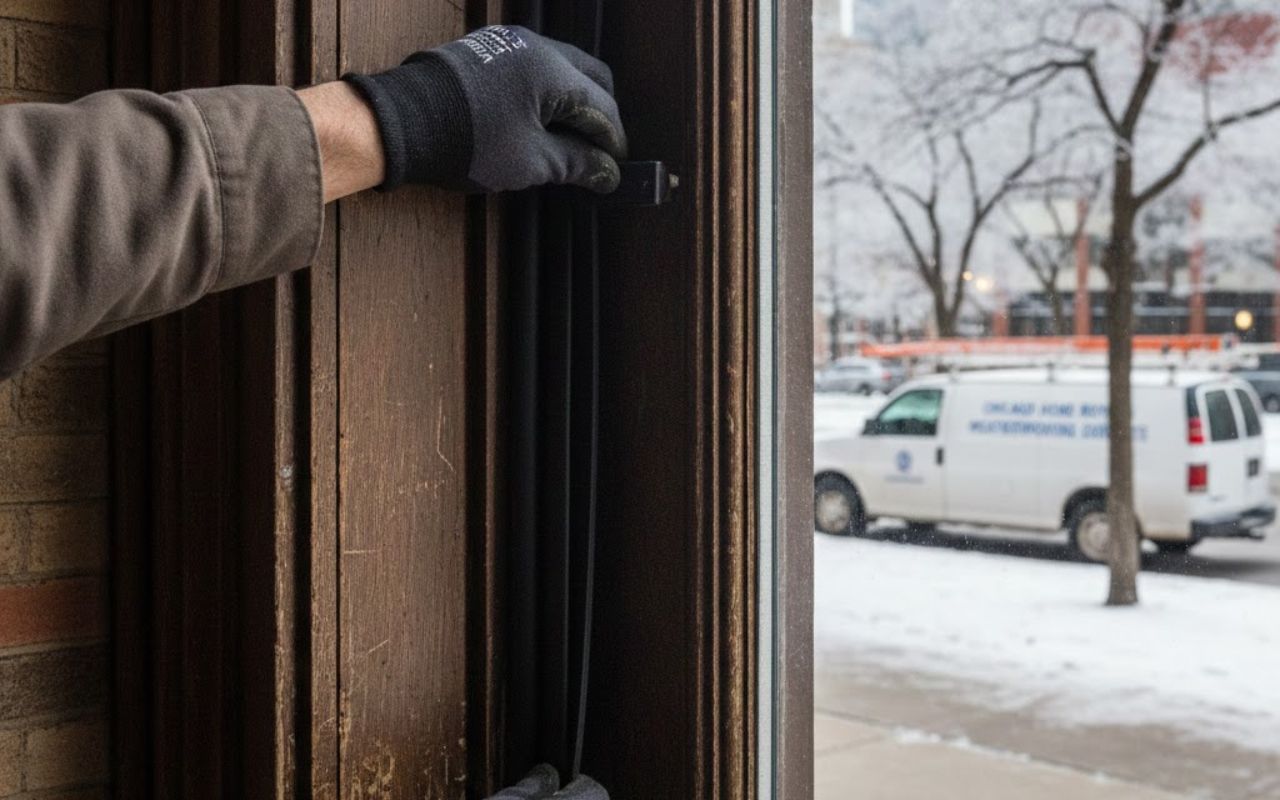
Chicago’s brutal winters can turn tiny gaps around your doors into big energy losses. This practical guide to Door Weather Stripping in Chicago explains how to stop drafts, control air infiltration, and improve comfort in homes and commercial buildings. You’ll learn material options, energy savings strategies, and simple installation tips that keep interiors warmer and utility bills lower throughout the season.
How Does Door Weather Stripping in Chicago Improve Comfort?
Sealing gaps around doors stops cold drafts, cuts air infiltration, and keeps indoor temperatures more stable in Chicago buildings. Well-fitted seals reduce commercial door drafts, protect flooring from moisture, and ease the load on your heating system. The result is cozier rooms, fewer complaints about cold entryways, and lower winter energy bills.
Understanding the Importance of Door Weather Stripping in Chicago
Chicago’s wind and temperature swings put constant stress on entry doors. When frames, jambs, or thresholds are not sealed, cold air sneaks in and warm air escapes. That air infiltration forces your heating system to work harder, raising operating costs for both homes and commercial properties.
Effective Door Weather Stripping in Chicago acts as your first line of defense against these leaks. It reduces commercial door drafts, improves comfort in high-traffic lobbies, and helps protect nearby flooring from moisture damage. It also filters out dust and outdoor pollutants that enter through gaps around the door.
Key benefits of quality door sealing include:
- Improved comfort near exterior doors, even on windy winter days.
- Lower heating bills thanks to reduced heat loss and better energy savings winter after winter.
- Less moisture, dirt, and noise entering through small openings.
- Extended life of doors, frames, and surrounding finishes.
For a deeper breakdown of solutions tailored to local buildings, explore our
door weather stripping solutions in Chicago.
Brush vs. Rubber Seals: Choosing the Right Material for Chicago’s Climate
Not all weather stripping materials perform the same way in Chicago’s climate. Brush vs rubber seals each offer advantages depending on your door style, exposure, and budget. Choosing the right combination helps you control drafts without making the door hard to open or close.
Brush seals use dense nylon or natural-fiber bristles mounted on a metal holder. They flex to follow uneven surfaces and are excellent where doors meet irregular thresholds or worn sills. Rubber seals are made from EPDM, vinyl, or silicone and compress to form a tight, durable barrier.
Use this quick comparison when selecting materials:
- Brush seals: Great for sliding doors, uneven thresholds, or doors with slight warping.
- Rubber or silicone seals: Best for primary exterior doors that face strong winds or heavy rain.
- Hybrid setups: Brush at the bottom, compressible rubber around jambs for maximum protection.
On heavily exposed exterior doors, rubber typically offers better resistance to driven rain and snow. For irregular edges or older frames, brush seals flex more easily and still limit energy loss. To explore more options, review the different
types of weather stripping for doors.
Locating Air Leaks: Identifying Problem Areas in Your Doors
Finding leaks is the first step to stopping them. Start by inspecting the full perimeter of your door—top, latch side, hinge side, and threshold—during a windy or very cold day. Stand on the inside and slowly move your hand around the frame to feel for even slight drafts.
For a more precise check, use a lit incense stick or smoke pen. Move it slowly around the edges of the closed door; smoke that wavers or gets pulled inward reveals air infiltration. Pay special attention to the corners, lock area, and the bottom edge where the door sweep meets the sill.
Common trouble spots include:
Bottom edge: A worn door sweep or missing threshold seal lets in the largest volumes of cold air.
Latch side and top: Compressed or cracked seals allow thin jets of air that feel minor but add up on your bill.
Frame-to-wall joint: Gaps between the frame and wall may need caulk in addition to new weather stripping.
How to Install Door Weather Stripping Step by Step
With basic tools and good installation tips, many Chicago property owners can handle this upgrade themselves. Set aside a couple of hours so you can work carefully and test the door thoroughly at the end.
- Inspect and measure. Check existing seals, door sweep, and threshold seal. Measure all sides of the door, including the bottom width.
- Remove old materials. Gently pry off worn strips, staples, and tacks. Scrape away old adhesive so new products bond well.
- Clean surfaces. Wipe the frame and door bottom with a mild cleaner and let everything dry fully before installation.
- Cut new weather stripping. Using your measurements, cut each piece slightly long and dry-fit it to confirm coverage without buckling.
- Attach side and top seals. For adhesive-backed products, peel the liner and press firmly along the frame. For screw-on types, pre-drill holes and fasten carefully.
- Install the door sweep. Position the sweep so its edge just kisses the threshold seal without dragging. Tighten screws while repeatedly opening and closing the door to check movement.
- Seal the threshold. If needed, add or adjust the threshold seal so no light shows underneath and the sweep maintains light contact.
- Perform a draft test. Close the door and repeat the hand or smoke test around the perimeter. Adjust screws or reposition strips until leaks are minimized.
Handled carefully, a weekend Door Weather Stripping Chicago project can noticeably boost comfort and reduce winter utility costs.
Professional Door Weather Stripping Services in Chicago: When to Call Experts
Some doors are simply too complex for a quick DIY fix. Oversized entry systems, older commercial doors, and frames with rot or structural issues often require specialized tools and experience. In those cases, a professional can diagnose the root cause of chronic commercial door drafts and recommend lasting solutions.
Experts evaluate the entire opening, including hinges, hardware, thresholds, and surrounding surfaces. They select the best combination of brush vs rubber seals, door sweep style, and threshold seal height to balance performance and ease of use. Professional installation also reduces the risk of gaps that lead to ongoing air infiltration.
If you’d rather have a specialist handle everything from assessment to final testing, explore our
door weather stripping services in Chicago.
When you’re ready to move forward, you can
request a weather stripping quote in Chicago
and schedule service at a convenient time.
Partnering with a trusted Door Weather Stripping Chicago provider ensures your doors seal tightly, operate smoothly, and stand up to the city’s demanding climate.
Maximizing Energy Efficiency: Tips for Properly Sealing Exterior Doors
A well-sealed door is part of a larger energy-efficiency strategy. After weather stripping is installed, confirm that the door closes squarely in the frame. Loose hinges or misaligned strike plates can create gaps that no seal can fully overcome.
Use flexible, exterior-grade caulk to fill remaining cracks between the frame and surrounding wall. Pay attention to the threshold area, where small openings can admit both water and cold air. In commercial settings, review automatic closers so doors fully latch, minimizing air exchange in busy entryways.
For even greater energy savings winter after winter, pair door improvements with upgraded insulation, properly sealed windows, and routine HVAC maintenance. Small sealing projects around openings work together to reduce total air leakage and stabilize indoor temperatures.
Maintaining Door Weather Stripping: Ensuring Longevity and Effectiveness
Weather stripping is not a one-time installation; it needs periodic inspection to stay effective. At least twice a year—typically before and after winter—check seals for cracks, flattening, or missing sections. Replace any damaged pieces immediately to prevent minor leaks from growing.
Keep brush seals clean by vacuuming dust and debris from between the bristles. For rubber components, wipe them with mild soapy water and dry thoroughly to prevent premature deterioration. Lubricate hinges and latches so the door moves smoothly and does not grind against newly installed strips.
A simple maintenance routine can extend the lifespan of materials, preserve your investment, and keep indoor spaces quieter, cleaner, and more comfortable.
Cost-Effective Solutions for Door Weather Stripping in Chicago
You don’t need a large budget to make meaningful improvements. Foam tape, basic V-strip, and economical door sweeps are widely available and easy to cut with household tools. They’re excellent for quick fixes on lightly used doors or rental properties where you need fast, reversible upgrades.
For busy entryways, investing slightly more in durable rubber or silicone seals often pays off in reduced replacements. Many kits bundle several products, allowing you to address multiple doors at once. With careful planning and good installation tips, even modest upfront costs can yield noticeable energy savings in the first heating season.
If you want help prioritizing which openings to seal first, you can
schedule a door weather stripping assessment in Chicago
and have a specialist focus on your draftiest areas.
Frequently Asked Questions
How much energy can I save by sealing exterior doors?
Weather stripping and sealing around doors can trim heating and cooling costs by several percentage points each year, especially in drafty buildings. When combined with sealing windows and other leaks, many properties see double-digit energy savings. For tailored recommendations, consider booking a professional inspection and energy audit.
When should I hire a professional instead of doing it myself?
Hire an expert if your doors are oversized, out of square, heavily rusted, or part of a complex commercial entry system. A professional can correct alignment issues, select the right door sweep and threshold seal, and test performance. Use the
contact form to reach a door weather stripping specialist in Chicago
and discuss your specific situation.
Which is better for Chicago winters: brush or rubber seals?
Rubber or silicone seals usually perform best on wind-exposed exterior doors because they compress tightly and resist moisture. Brush seals work well on sliding doors, older frames, or uneven surfaces. Many professional installations combine both types to balance durability, flexibility, and draft control in local conditions.
How do I know my weather stripping is installed correctly?
A properly sealed door closes smoothly, with no slamming or scraping, yet you should not see light around the edges. A hand or smoke test should reveal little to no air movement. If you’re unsure about the fit, you can
request a door sealing inspection in Chicago
for a professional evaluation.
How often should I replace door weather stripping in Chicago?
Most materials last between two and five years, depending on foot traffic and exposure to sun, wind, and moisture. Inspect seals at least annually and replace them whenever you see cracks, gaps, or compressed areas that no longer spring back. Regular replacement helps prevent the return of drafts and protects your previous energy upgrades.
Eco-Friendly Options: Sustainable Door Weather Stripping Alternatives
Many Chicago property owners want to improve comfort while supporting sustainability goals. Recycled rubber seals reduce demand for virgin materials and offer excellent durability in harsh weather. Natural-fiber brush seals made from materials such as sisal or horsehair provide an alternative to plastic-based options while still curbing drafts.
Look for threshold components made with bamboo, cork, or sustainably sourced wood, paired with low-VOC, water-based adhesives and sealants. These choices maintain healthy indoor air quality while lowering your overall environmental footprint. Combined with broader weatherization efforts, eco-friendly Door Weather Stripping Chicago supports both comfort and climate-conscious living.
Achieving Comfort and Savings Through Efficient Door Weather Stripping
Sealing your doors is one of the fastest, most cost-effective ways to improve winter comfort in Chicago. By combining careful leak detection, the right choice of brush vs rubber seals, and proper installation, you can significantly reduce drafts and heating costs.
Whether you tackle the work yourself or partner with a professional Door Weather Stripping Chicago team, ongoing maintenance and occasional upgrades will keep your building performing well. The payoff is a warmer, quieter, more efficient space that stays comfortable season after season.