
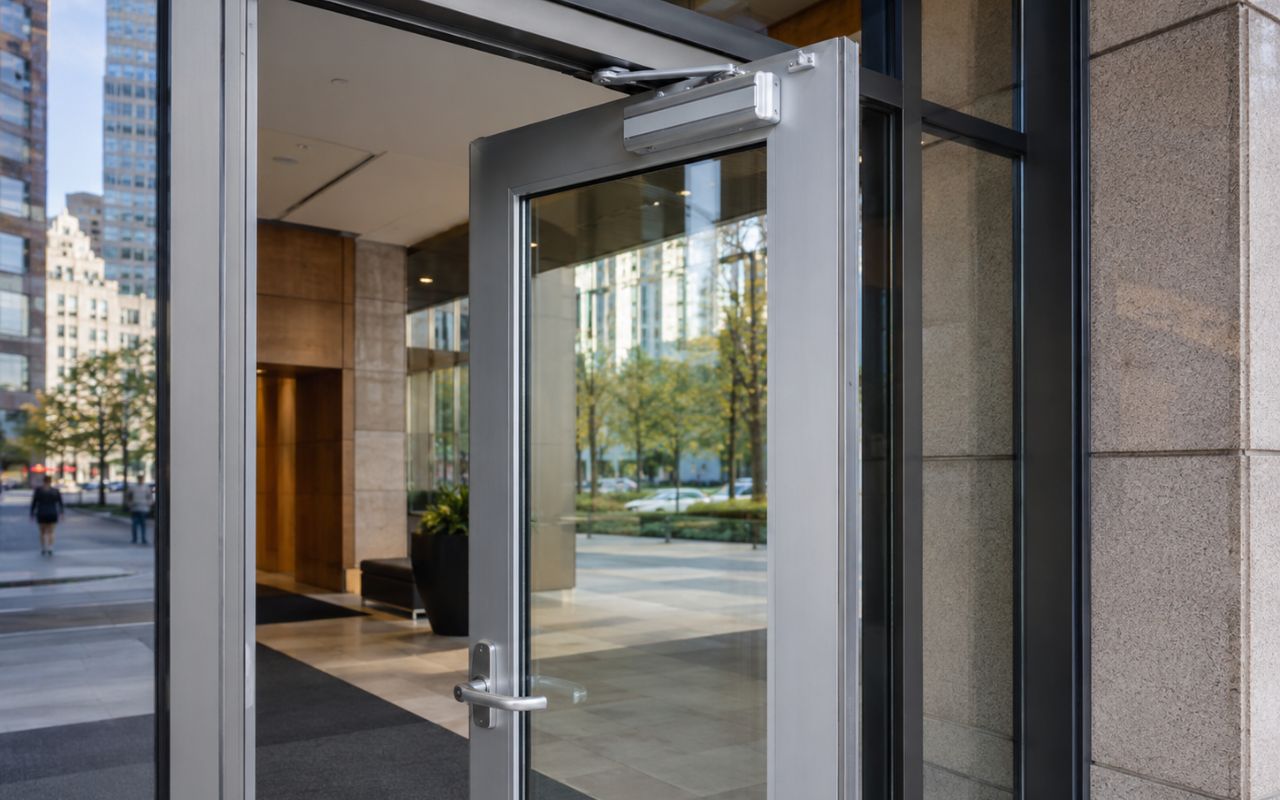
Accessible entrances help every visitor move with less stress. At Chicago Door People, we explain door closer rules in simple terms so business owners, managers, and property teams can make safer choices for their Chicago buildings.
What Makes ADA door closer requirements in Chicago Easier?
ADA door closer requirements in Chicago are easier when you check opening force, closingspeed, hardware type, and regular maintenance. A compliant door should open with reasonable effort, close slowly enough for safe passage, and support access for people using wheelchairs, walkers, canes, or limited hand strength.
ADA door closer requirements in Chicago describe how a door closer should help a door open and close without blocking access. Business owners, property managers, and facility teams need them when entrances feel heavy, close too fast, or create barriers for visitors, staff, and customers with mobility needs.
Clarify Local Door Rules Before Accessibility Problems Grow
ADA door closer requirements in Chicago focus on safe access, controlled closing, and usable entry points. Therefore, a door closer must support the person using the door, not fight against them. The right setup helps reduce complaints, access barriers, and last-minute repair needs.
Chicago Door People checks the door, frame, hinges, closer arm, latch, and traffic flow before recommending a next step. Moreover, we explain what may affect real use, including wind, worn hardware, door weight, and poor adjustment.
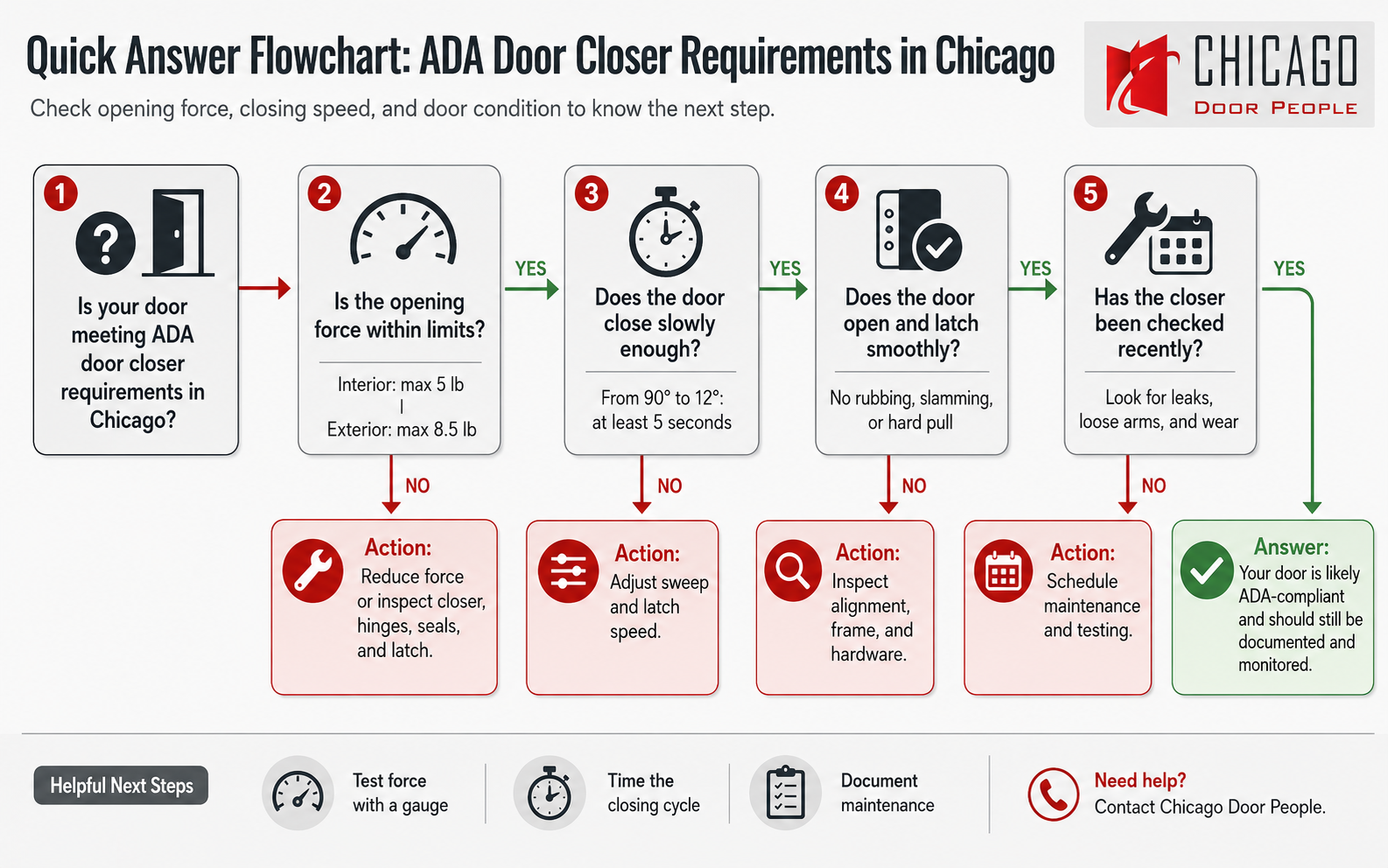
According to the 2010 ADA Standards for Accessible Design, interior hinged doors on accessible routes have a 5-pound maximum opening force, except for some listed conditions.
- Interior doors should feel easy enough for daily public use.
- Closers should not make the door slam or pull back hard.
- Hardware should allow safe use without tight grasping.
- Door movement should support people using mobility devices.
Also, Chicago exterior doors can have separate local force rules. The Chicago code states that exterior hinged doors and gates must not exceed 8.5 pounds of opening force, apart from latch release force.
Choose Accessible Closers That Support Safer Daily Entry
An accessible door closer should match the door size, use level, frame condition, and entry location. As a result, the door can close securely while staying easier to open. The best choice depends on daily traffic, weather exposure, and the door’s condition.
Chicago Door People recommends reviewing the full door system, not only the closer. Therefore, a heavy pull may come from hinges, seals, frame rub, latch trouble, or the wrong closer strength.
Common closer options include surface-mounted closers, concealed closers, and floor-spring closers. However, the right option must also support ADA opening force in Chicago and safe closing speed.
- Choose surface-mounted closers for many standard commercial doors.
- Choose concealed closers when appearance and clean lines matter.
- Choose floor-spring closers when the door design requires floor control.
- Choose adjustable closers when tuning is important for access.
For setup support, our commercial closer installation guide explains closer sizing, mounting, and ADA-friendly tuning.
Key Takeaway: Accessible doors need the right force, closing control, and hardware condition. Therefore, closer selection and adjustment should happen together.
Compare Door Issues Before Selecting Repair Or Replacement
Door closer problems often look simple, yet the cause may sit in another part of the opening. Therefore, comparing signs helps avoid the wrong fix. A proper inspection can show whether the door needs adjustment, repair, replacement, or new commercial hardware.
Chicago Door People looks for rubbing, leaks, loose screws, bent arms, worn pivots, damaged seals, and uneven latch contact. Moreover, we explain what we find before work begins so the customer understands the repair path.
| Door Sign | Helpful Next Step |
|---|---|
| The door feels too heavy to open | Test opening force and inspect hinges, seals, latch, and closer strength. |
| The door closes too fast | Adjust sweep and latch speed, then test the closing time again. |
| The closer leaks fluid | Plan closer replacement because hydraulic control may be failing. |
| The door does not latch | Check alignment, strike position, closer setting, and frame condition. |
Additionally, the closer replacement options page can help when worn hardware no longer supports reliable door control.
Follow Testing Steps That Keep Door Closers Compliant
Testing helps confirm that ADA door compliance works in real use, not only on paper. Therefore, each door should be checked for opening force, closing speed, latch control, and clear passage. Testing also helps find small issues before they become safety concerns.
At Chicago Door People, we use a practical inspection process and document what we check. Moreover, we explain whether adjustment is enough or whether worn parts need replacement.
The ADA Standards say a door closer should move from 90 degrees open to 12 degrees from the latch in at least 5 seconds. This timing gives many users more space to pass safely.
- Open the door fully and watch for rubbing or frame contact.
- Measure opening force with the correct gauge.
- Time the closing cycle from 90 degrees toward the latch.
- Check whether the door latches without slamming.
- Record the result for future maintenance reviews.
If the door only needs fine tuning, our door closer adjustment guide explains common adjustment points in simple terms.
Key Takeaway: Testing opening force and closing speed gives building teams clear proof of door performance. Also, it helps prevent repeat access problems.
Maintain Smooth Door Movement Through Routine Field Checks
Routine maintenance keeps an accessible door closer working after daily use, weather changes, and normal wear. Therefore, a door that passed before may need later adjustment. Regular checks help protect access, reduce damage, and support safer customer movement.
Even a good closer can drift out of setting over time. Also, Chicago weather can affect exterior doors through pressure, wind, swelling, corrosion, and seal wear.
Simple checks can make a real difference. Therefore, look for oil leaks, loose arms, missing screws, heavy pulling, frame rubbing, loud slams, and latch failure. Then, schedule service before the problem affects visitors.
- Check door movement every season.
- Listen for slamming, scraping, or grinding.
- Look for leaking closer fluid.
- Confirm the door still latches securely.
- Review commercial hardware when several parts show wear.
For broader hardware concerns, our commercial door hardware services page explains related parts that affect safe entry.
Frequently Asked Questions
How do I know my door closer is accessible?
Your door closer may be accessible when the door opens with reasonable force, closes slowly, latches safely, and does not block clear entry. Also, a professional test can confirm force and speed. For setup help, see our commercial closer installation guide.
When should I adjust my closer instead of replacing it?
You may only need adjustment when the closer is not leaking, the arm is secure, and the door still moves smoothly. However, leaking fluid or weak control often means replacement. Our door closer adjustment guide explains common signs.
What happens if my business ignores door closer issues?
Ignoring closer issues can lead to hard-to-open doors, slamming, latch failure, and poor access for visitors. Also, worn parts can damage frames and hardware. When the closer is failing, review our closer replacement options.
Why is my commercial door suddenly harder to open?
A door may become harder to open because of closer tension, hinge wear, seal pressure, frame rubbing, latch trouble, or weather changes. Therefore, the whole opening should be checked. Related parts are covered on our commercial door hardware services page.
How do I schedule help with door compliance concerns?
You can schedule help by sharing the door issue, building type, and location. Then, our team can review closer function, hardware, and next steps. Use our contact our team page to request service.
Build More Welcoming Entrances Through Practical Door Planning
Better door planning improves access, comfort, and safety for many people. Chicago Door People can inspect, adjust, repair, or replace closers so your entrance supports ADA door closer requirements in Chicago. To start, contact our team and tell us what your door is doing.