
Table of Contents
| Section | Link |
|---|---|
| How can you improve door energy efficiency in your home? | Go |
| Understanding why door energy efficiency matters | Go |
| Common causes of energy loss through doors | Go |
| Weather-stripping and draft prevention solutions | Go |
| Upgrading to energy-efficient doors | Go |
| Step-by-step door energy efficiency upgrade | Go |
| Frequently Asked Questions | Go |
| References | Go |
Improving door energy efficiency can drastically reduce your utility bills and increase comfort. By sealing drafts, adding insulation, and choosing energy-efficient materials, homeowners can minimize heat loss and maximize savings. Learn how simple upgrades like weather-stripping and draft prevention doors create a cozy, sustainable, and energy-smart home.
How can you improve door energy efficiency in your home?
To improve door energy efficiency in your home, start by sealing gaps, installing quality weather-stripping, and upgrading to insulated doors. These steps reduce heat loss, enhance comfort, and lower energy costs. Energy-efficient doors minimize drafts, helping your HVAC system run efficiently while contributing to a more sustainable, cost-effective household.
Understanding why door energy efficiency matters
Door energy efficiency affects your home’s comfort, temperature, and energy costs. A tightly sealed door keeps warm air inside during winter and blocks heat in summer. According to the U.S. Department of Energy (DOE), sealing air leaks around doors and windows can save 5%–30% of your annual heating and cooling energy. When you enhance door energy efficiency, your HVAC system works less, reducing both energy consumption and environmental impact.
Common causes of energy loss through doors
- Gaps and cracks caused by shrinking or expanding materials around door edges.
- Old or damaged weather-stripping that no longer seals properly.
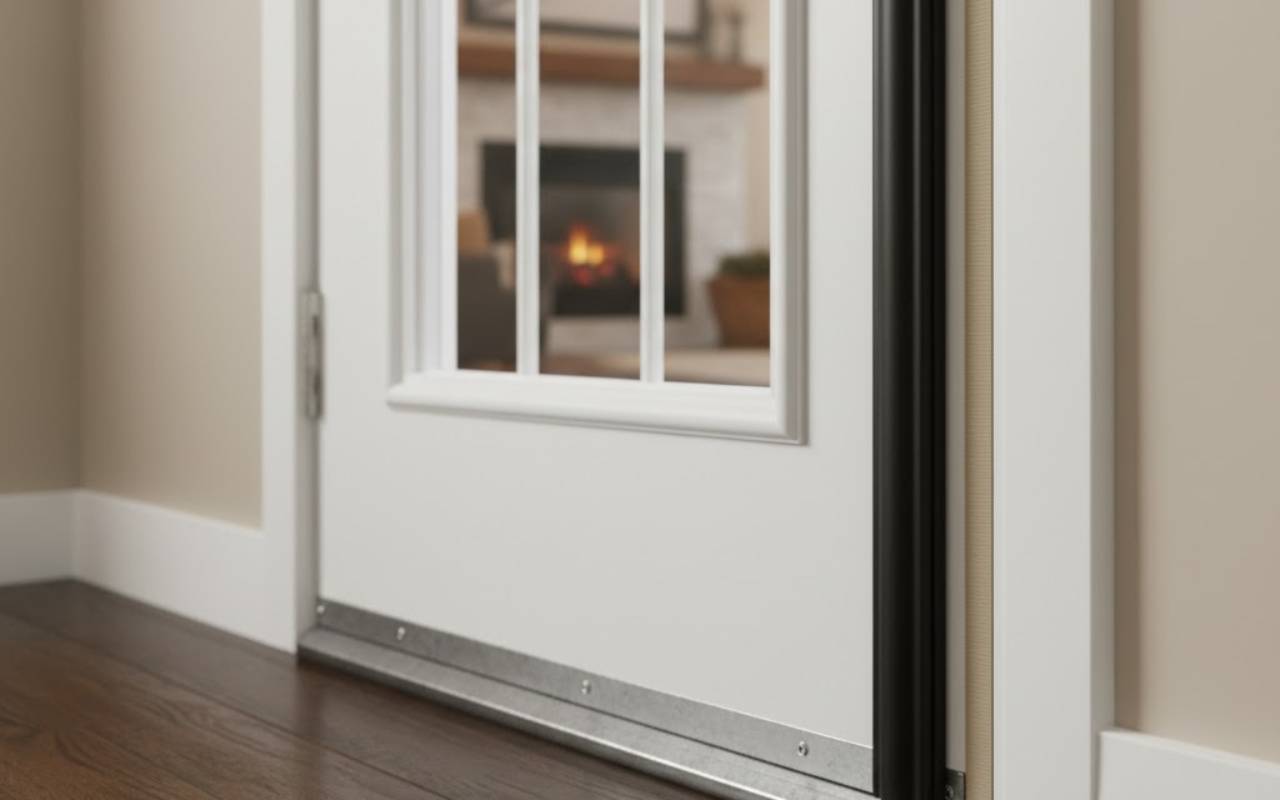
- Missing or ineffective door sweeps at the bottom of exterior doors.
- Warped or misaligned door frames that allow conditioned air to escape.
Identifying and sealing these issues can instantly improve your door energy efficiency, keeping your home consistently comfortable.
Weather-stripping and draft prevention solutions
Weather-stripping provides a quick, affordable solution to air leaks. Adhesive foam tape and V-strips are ideal for small gaps, while a proper door sweep blocks drafts under the door. According to the DOE, “caulking and weather-stripping are two simple and effective air-sealing techniques that offer quick returns on investment—often one year or less.” For best results, consider upgrading to doors designed with insulation and tight seals.
Upgrading to energy-efficient doors
When it’s time for a replacement, choose doors built with energy-efficiency in mind: foam-core insulation, tight tolerances, and minimal air leakage. The DOE notes that replacing or weather-stripping exterior doors “can save money and energy in your home.” Also, the ENERGY STAR program offers tax credits for qualifying exterior doors, helping offset the investment.
How-to: Step-by-step door energy efficiency upgrade
- Inspect your doors on a windy day: feel for drafts along edges or use a flashlight at night to check for light showing through.
- Clean the door frame and threshold thoroughly before applying weather-stripping.
- Apply adhesive foam tape around the perimeter or install a V-strip for tighter spaces.
- Install a door sweep at the bottom, ensuring it brushes gently against the threshold.
- Seal any larger gaps around the frame with caulk (stationary portions) and then check alignment of the door.
- If the door is outdated or heavily damaged, upgrade to a certified energy-efficient model to lock in long-term savings.
Frequently Asked Questions
- What is door energy efficiency?
It refers to how well a door prevents heat transfer, maintains indoor temperature, and reduces air leakage, thereby lowering energy waste. - How do I know if my door is energy-efficient?
Check for gaps or light showing through around the door when it’s closed, and review whether the door has good insulation and weather-stripping. - Can weather-stripping improve energy savings?
Yes. According to the DOE, weather-stripping and air-sealing techniques often pay back within a year by reducing energy use. - What types of doors are best for energy efficiency?
Doors with insulated cores (foam), tight weather-seals, minimal glass, or low-emissivity (Low-E) glass if windows are included, tend to perform best. - Are there incentives for upgrading to energy-efficient doors?
Yes. Exterior doors qualifying under ENERGY STAR or other certified programs may be eligible for federal tax credits under the Home Energy Improvement Credit.