
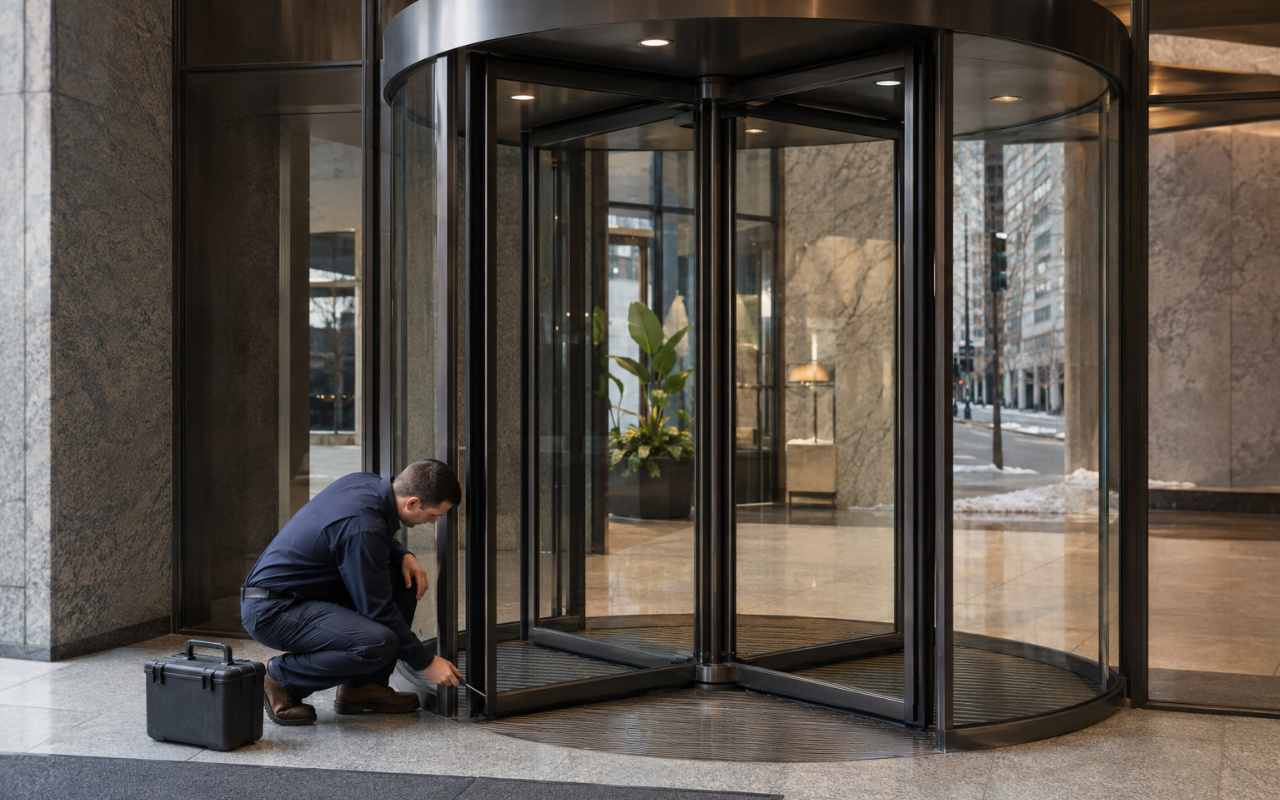
Revolving door maintenance protects Chicago buildings by keeping entrances smooth, safe, clean, and energy efficient. Regular checks help find worn seals, loose hardware, sensor issues, and stiff rotation before they disrupt daily traffic or create safety concerns.
Chicago entrances work hard during heat, storms, wind, salt, and daily foot traffic. At Chicago Door People, we help property teams spot small door problems before they affect safety, comfort, or traffic flow.
For help planning your next inspection, use our Schedule a door inspection page.
Spot Revolving Door Problems Before They Spread
Regular checks reduce sudden failures because many revolving door problems start small. A stiff panel, loose fitting, dirty track, or delayed sensor can become a larger issue when the entrance keeps operating under heavy use.
Our team checks rotation, panel alignment, visible hardware, glass condition, floor areas, emergency stop controls, and sensor response. These checks help us explain whether the door needs cleaning, adjustment, lubrication, repair, or a closer professional review.
Warning Signs to Watch
- Slow or stiff movement
- Grinding, squeaking, or clicking sounds
- Visible gaps around panels
- Loose or damaged brush seals
- Jerking, hesitation, or sudden stops
- Delayed automatic sensor response
According to BHMA, revolving pedestrian door standards include safety provisions related to speed, egress, signage, and sensors. That is why safety checks should not wait until a door stops working.
Inspect Brush Seals for Comfort and Air Control
A revolving door brush seal inspection helps protect comfort by limiting drafts, moisture, dust, and debris around the entrance. In Chicago, damaged seals are often more noticeable during windy, cold, humid, or wet weather.
Brush seals should touch the right surfaces without dragging too hard. When bristles are missing, bent, compressed, or loose, the entrance may feel drafty and harder to keep clean.
With Chicago Door People, customers get clear guidance before seal work begins.
Brush Seal Inspection Points
- Look for frayed or missing bristles
- Check for gaps near the frame
- Watch for seals dragging on the floor
- Clear dirt, grit, and salt buildup
- Ask for service when drafts continue
For related entrance support, use our commercial entrance service request page before planning larger repairs.
Key Takeaway
Early maintenance helps prevent small entrance issues from becoming safety, comfort, or traffic-flow problems. Brush seals are especially important in Chicago weather.
Compare Revolving Door Issues and Next Steps
Different symptoms can point to different maintenance needs. A clear comparison helps property teams decide whether cleaning, adjustment, repair, or professional inspection should happen first.
Revolving Door Maintenance Guide
| Issue | Why It Matters | Helpful Next Step |
|---|---|---|
| Stiff or slow rotation | Traffic may back up and users may push harder on panels. | Check floor areas, alignment, bearings, and service history. |
| Frayed brush seals | Drafts, dust, moisture, and debris may enter more easily. | Schedule seal inspection or replacement review. |
| Delayed sensor response | Automatic doors may become less predictable for users. | Request sensor testing before the issue worsens. |
| Grinding or clicking sounds | Hardware, track, or bearing wear may be developing. | Stop ignoring the sound and request inspection. |
| Gaps around panels | Air leakage and comfort issues may increase. | Review panel alignment, seals, and adjustment needs. |
Use a Summer Maintenance Checklist
A revolving door summer maintenance checklist helps property teams prepare for heat, humidity, storms, dust, and heavier visitor traffic. Summer care should focus on clean sensors, smooth movement, seal condition, and safe daily operation.
During warm months, metal parts can collect dust and residue faster near busy entrances. Humidity may also make dirt stick around tracks, frames, and seals.
Therefore, simple cleaning and visible checks can prevent many comfort and traffic problems.
Summer Entrance Checks
- Clean glass, frames, and accessible sensor covers
- Remove dust, leaves, and debris from floor areas
- Check seals for heat-related wear
- Listen for new noises during rotation
- Confirm emergency controls are visible
- Record changes after storms or heavy use
Pacific Northwest National Laboratory notes that air infiltration through door openings can affect commercial building energy use. Clean seals and smooth rotation help revolving entrances perform their basic purpose.
Key Takeaway
Summer maintenance should focus on sensors, seals, tracks, glass, floor areas, and noise changes. Heat, humidity, storms, and foot traffic can reveal hidden issues.
Build a Service Schedule Around Building Use
A revolving door service schedule in Chicago should match traffic level, door age, weather exposure, and system type. High-use buildings often need more frequent checks than quiet entrances with limited daily traffic.
At Chicago Door People, we help managers think through practical service timing without guessing. A hotel, office tower, hospital, or retail entrance may see constant use.
Meanwhile, a smaller commercial building may need fewer professional inspections. Chicago weather adds extra strain through wind, road salt, ice, water, and temperature swings.
Practical Service Timing
- Weekly visual checks by building staff
- Monthly cleaning and performance notes
- Seasonal checks before summer and winter
- Professional review after impact or sudden failure
- Separate records for each entrance
To plan service around your building’s schedule, contact our team through Request entrance service planning.
Book Maintenance With Clear Entrance Details
A clear booking process helps property teams understand what happens before, during, and after the appointment. When customers contact Chicago Door People, we ask about the door problem, building type, entrance use, and visible warning signs.
After booking, we review the issue and prepare for the inspection. During the appointment, we check safe operation, visible parts, alignment, seals, sensors, hardware, and movement.
Before work begins, we explain practical next steps. Once the work is complete, we help customers understand what was checked and what should be watched next.
Booking Preparation Steps
- Describe the door type and current issue.
- Share when the problem started.
- Tell us about noises, drafts, or sudden stops.
- We inspect the entrance and explain findings.
- We review repair or maintenance options.
Clear records make future service easier.
Key Takeaway
A useful maintenance plan depends on building traffic, weather exposure, door age, sensor behavior, seal condition, and clear service records.
Frequently Asked Questions
How often should commercial revolving doors be checked?
Many commercial revolving doors should be checked every six to twelve months, depending on traffic, age, weather exposure, and operation type. High-traffic Chicago entrances may need more frequent reviews. For help choosing a timeline, use Ask about inspection timing.
What warning signs show maintenance should happen soon?
Maintenance should happen soon when a door rotates slowly, jerks, makes grinding sounds, stops suddenly, shows gaps, or has damaged seals. Sensor delay, loose panels, cracked glass, and strong drafts also need attention before the problem grows.
Can building staff clean a revolving door safely?
Building staff can usually clean glass, frames, floor areas, and accessible sensor covers. They should avoid motors, wiring, glass removal, or structural adjustments. For broader commercial entry support, use our commercial door support request page.
Why do brush seals matter for Chicago entrances?
Brush seals matter because they help block drafts, dust, moisture, salt, and debris. In Chicago, worn seals can make indoor areas less comfortable during windy or cold weather. Damaged seals can also increase friction and reduce smooth movement.
When should a technician inspect automatic door sensors?
A technician should inspect sensors when the door stops unexpectedly, responds late, moves unevenly, or fails to detect users correctly. Sensor issues can affect safety and flow, so schedule automatic door sensor help before the entrance becomes unreliable.
Start Safer Entrance Care With Clear Next Steps
Small changes in revolving door performance should never be ignored. Noises, drafts, slow movement, worn seals, and sudden stops all deserve attention.
At Chicago Door People, we guide commercial customers through practical inspection, maintenance, and repair steps. Use our Contact a commercial door specialist page to plan your next appointment.